

The Silent Shepherds of the Marble Coast: Sheep, Stone, and Survival in Pietrasanta
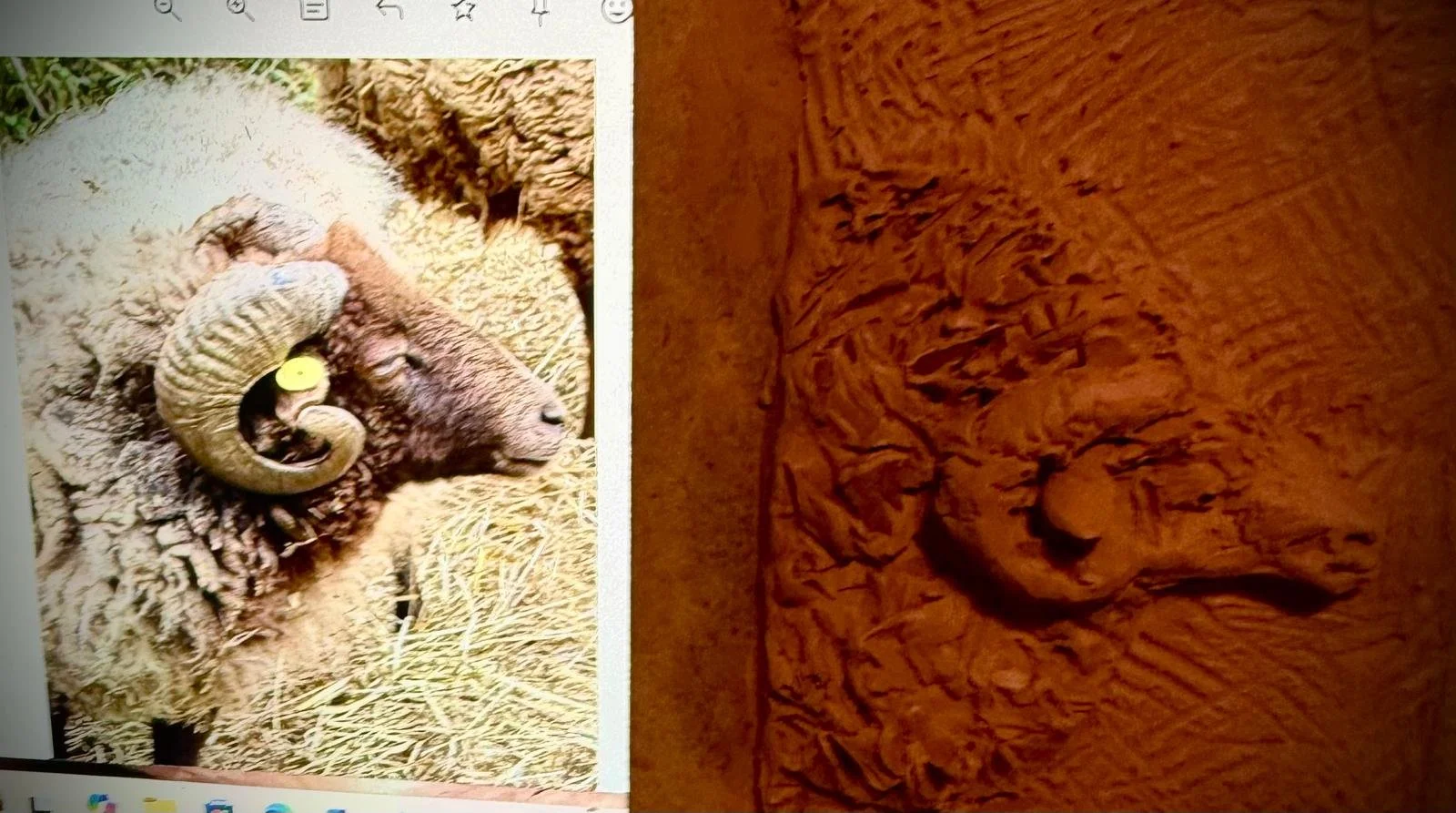
Pietrasanta is world-renowned for its marble and bronze, yet its soul rests on a humbler rhythm. Long before the galleries defined the town’s silhouette, the hills of Versilia were governed by the tinkling bells of sheep. To truly understand this region, one must look past the polished sculpture to the rugged peaks—a narrative of resilience and a deep, tactile connection to the earth.
I laid out and sculpted this one hour relief in the beautiful town of Valdicastello Carducci while attending a marble workshop. They have sheep on the property that roam among the sculptors!
The "Vie delle Erbe": Transhumance and the High Pastures
For centuries, Pietrasanta served as a vital junction for transhumance (transumanza). Every season, shepherds navigated their flocks from the coastal plains of the Maremma up to the lush, high-altitude grasses of the Garfagnana and the Apuan Alps.
These sheep were the primary architects of the landscape we admire today:
The Living Lawn: The open, terraced hillsides surrounding the town were kept clear of encroaching forests by centuries of grazing. This allowed for the development of the historic mule tracks that later facilitated the transport of marble.
The Wool Economy: In the Middle Ages, the wool from these hardy flocks provided the raw material for the textile trades of nearby Lucca and Florence, grounding the region's early wealth in pastoral labor.
The Breed of the Alps: The Garfagnina Bianca
The true protagonist of this history is the Garfagnina Bianca (White Garfagnina). This is a rustic sheep with a noble profile, possessing a physical hardiness that mirrors the stone of the mountains.
Though the breed nearly vanished in the late 20th century, a resurgence in artisanal farming has saved it from extinction. For the local artisan, the Garfagnina Bianca is a symbol of biodiversity and tradition. Its milk produces Pecorino della Garfagnana, a cheese characterized by the wild herbs of the mountain slopes—a literal taste of the Versilian terroir.
The Sculptural Muse: Sheep in Art and Symbol
For a town dedicated to the marble arts, the sheep has naturally transitioned from the pasture to the pedestal. The animal appears throughout the city as both a religious and secular icon:
Sacred Imagery: In the Duomo di San Martino, the Agnus Dei (Lamb of God) is carved into the architecture, representing sacrifice and purity—a poignant contrast to the raw, unhewn stone.
The Figurative Form: Many contemporary sculptors working in Pietrasanta’s studios are drawn to the sheep’s form. Its heavy, textured coat and slender legs offer a fascinating study in volumes and weights, making it a recurring subject for those exploring the bond between humans and the natural world.
Pathfinders: Local lore suggests that early marble prospectors often followed the paths worn by sheep. The animals naturally found the most stable, rocky outcrops, inadvertently leading humans to the richest veins of statuary marble.
Echoes of the Pasture Today
The pastoral spirit still lingers for those who know where to look. If you wander the trails leading toward the hillside hamlet of Capriglia, the modern world fades. In the quiet of the morning, you can still hear the distant bells of small flocks grazing near ancient chestnut groves.
In the center of Pietrasanta, the Fiera di San Biagio held every February remains a bridge to this history. Once a massive livestock market, it continues to celebrate the agricultural roots that predate the town's artistic fame.
The sheep of Pietrasanta remind us that before the marble was a masterpiece, it was a mountain; and before the town was a gallery, it was a home for the shepherd. The pastoral tradition provides the grounded, organic counterpoint to the refined world of sculpture, reminding us of the raw, tactile reality from which all art is born.