

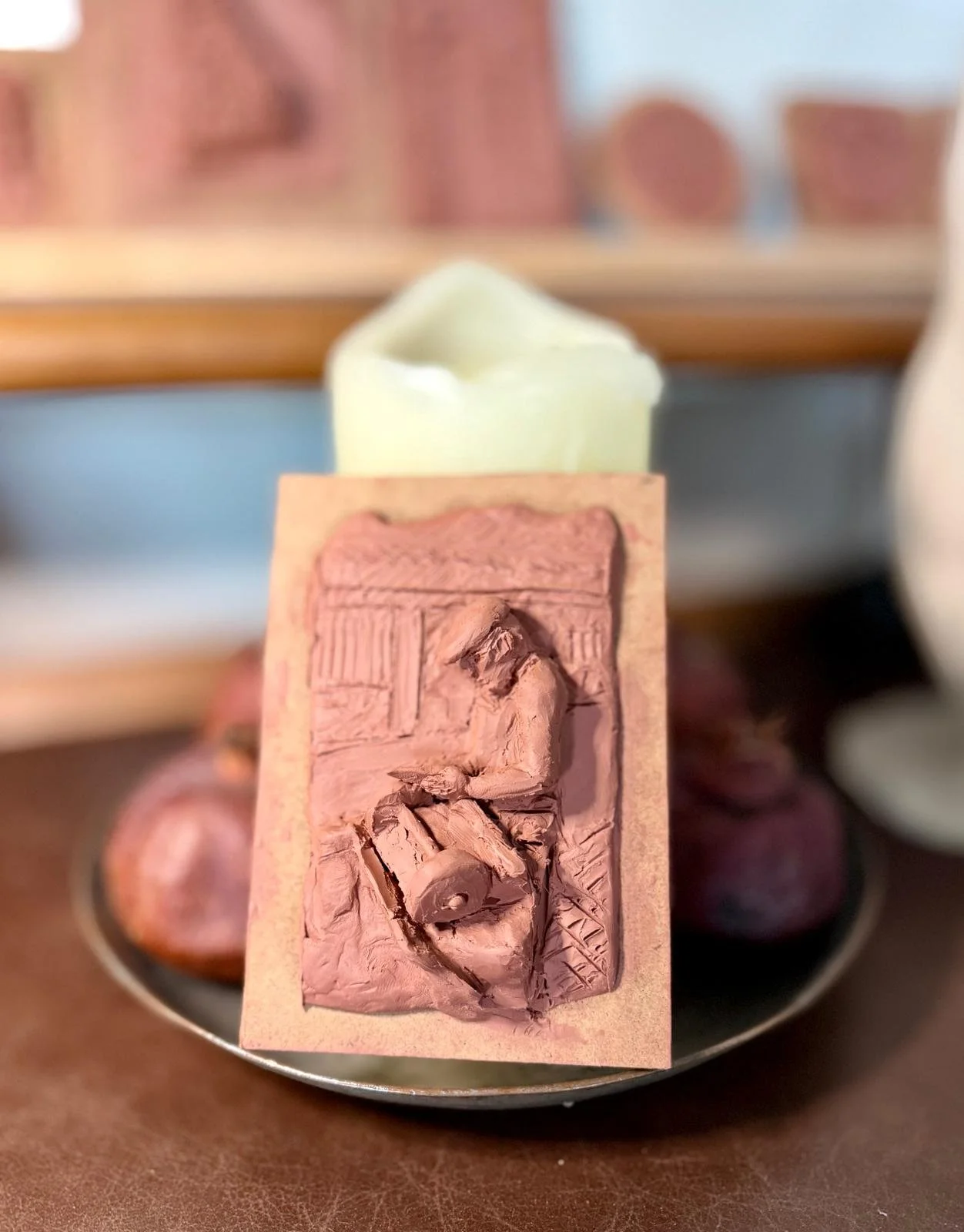
Chasing Sparks: A Walk with Beyoğlu’s Legendary Mobile Sharpeners
Origin
In the rural landscapes of Tunisia, I encountered a phrase that would eventually shape my worldview: "Numero Hadesh"—Number Eleven. Initially, it was a riddle. When I asked locals how to travel between locations, the answer was invariably "Number Eleven." For months, I scanned for bus routes or marked vehicles, finding none.
The breakthrough came when I finally paid attention to the body language accompanying the advice: index and middle fingers pointing down, swinging back and forth. Two legs. Two distinct "ones" moving side-by-side. "Numero Hadesh" wasn't a vehicle; it was the act of walking.
That realization took on profound meaning when I met my wife in Tunisia. We married to walk the path of life together, and the number 11 became our symbol. From our marriage date to the serendipity of catching the clock at 11:11, the image of parallel elevens represents two individuals moving forward, side-by-side, in distinct but shared unity.
Project 11 is born from this philosophy. It is a conscious decision to walk through life with open eyes, taking the time to recognize the wonders that connect us. As an artist, I see sculpture in everything, but the true vision of this project is to bring others along for the walk—to expand our understanding, explore new vantage points, and share the beauty that surrounds us all.
Introducing Project Eleven: A Journey of Art, Place, and Connection.
Project Eleven is an immersive artistic adventure that fuses intentional exploration with the power of sculpture. By deeply immersing ourselves in the rich culture of a city or the raw beauty of a natural landscape, we capture the essence of "place" through the simple, grounding act of walking.
But this is more than just a studio practice—it is a shared experience. Over the course of several weeks or months, we engage the community through live plein-air sculpting sessions, behind-the-scenes documentation, and on-site technical studies. The journey can culminate in a transformative gallery exhibition designed to be a contemplative sanctuary—a space that sparks wonder and prompts us to reflect on our own impact within the community and the environment that surrounds us.
Core Subject and Themes
The project will feature a collection of sculptures that draw inspiration from life and the inherent sculptural qualities of the observed world.
Primary Themes:
Impermanence and Change: Sculptures will utilize materials that evoke a sense of history, transformation, or motion (e.g., patinated metals, fired raw clays, balanced kinetic elements) to reflect the constant flux of nature and life.
Sculpting Our World: With a focus on process and experience, plein-air sculpting captures the spontaneity of life while recognizing the sculpture that surrounds us but is often unseen.
Interconnectedness: The arrangement and forms of the sculptures will suggest a dialogue between individual pieces, illustrating how discrete elements contribute to a cohesive, interdependent community life.
Artistic Vision and Style
The style is mainly figurative with some stylistic abstraction to emphasize specific themes. The artistic vision is to capture a sculptural sketch of life as it unfolds in real-time.
Audience:
The project is intended for a broad audience, including:
Individuals interested in the creative process, specifically related to the interaction and recognition of sculpture in everyday life.
Art enthusiasts and collectors interested in contemporary sculpture and cultural documentation.
Students and educators in art, history, and sculptural process.
Project Structure and Lay
The project will be structured into three components: historic narrative, photos/sketches of the theme, and sculptural ‘maquettes’ with scaled pieces, guiding the visitor through a sensory and conceptual journey:
I. Context (Historic Narrative)
Focus: Provide context for the current observed reality.
Key Messages: Recognition of historic context to explore the change or permanence of the observed theme.
II. Process (Capturing a Sculptural Snapshot)
Focus: Document methods and experience in identifying and capturing a theme in clay.
Key Messages: A focus on experience, movement, and the capture of a moment in life.
III. Sculptural Products (Physical Pieces)
Focus: Three-dimensional representations of life.
Key Messages: Artist and audience interpretation of an event to spark thoughtfulness on observing the wonders of our surroundings and the sculpture in our world.
Essential Information / Key Messages
Sculpture surrounds and influences us in ways that are often not recognized.
The process of sculpting is as fulfilling as the final results.
Final products of the sculpting process elicit emotions and motivations that can only be interpreted by the viewer.
Conclusion
"Project Eleven" offers a timely and compelling artistic inquiry into our relationship with our environment. By presenting life through tactile sculpture, contextual narrative, and documented process, the project aims to inspire awe, foster introspection, and reinforce the vital connection prompting visitors to reflect on their own place and impact within the community.
It All Begins Here- Visit this blog and sign up for our newsletter for the latest updates!
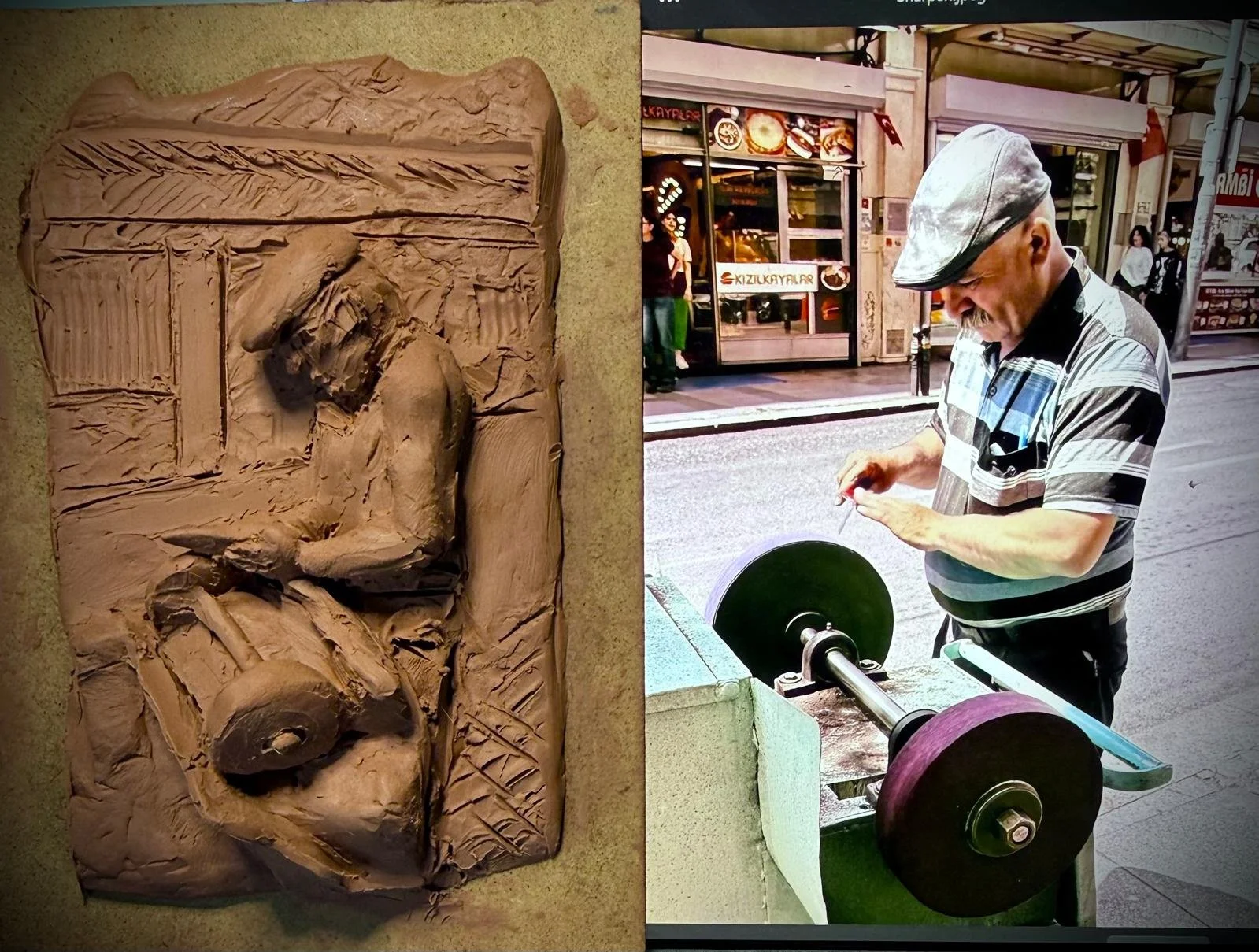
If you spend enough time wandering away from the neon glow of Istiklal Avenue and plunge into the steep, cobblestone labyrinth of Beyoğlu, you will eventually hear it.
It starts as a rhythmic, metallic scrape, followed by a bright shower of orange sparks illuminating a shadowy Ottoman-era alleyway. Then comes the call, echoing off the neoclassical facades: “Bileyiciii! Hanımlar, beyler, bıçaklar bileyiciii!” (Sharpener! Ladies, gentlemen, knives to sharpen!)
This is the sound of the bıçak bileyicisi—the mobile street knife sharpener. In a mega-city rapidly digitizing and rushing toward the future, these craftsmen are walking archives of Istanbul's neighborhood-centric history. For travelers seeking authentic Turkish culture or researching disappearing trades, understanding this ancient craft offers an intimate look into the city's living heritage.
I laid out this one hour quick-sketch relief in the street and finished it at home.
The Living History of the Bileyici (Istanbul Knife Sharpeners)
Street vending has always been the lifeblood of Istanbul’s neighborhoods (mahalles). For centuries, everything from fresh yogurt (yoğurtçu) to old clothes (eskici) was traded right at the doorstep. The bileyici belongs to this proud, disappearing lineage of traditional Turkish artisans.
Historically, these sharpeners didn’t just service home kitchens. They were the backbone of Beyoğlu’s diverse daily operations, maintaining the tools for:
The Grand Restaurants & Meyhanes: Keeping the heavy cleavers razor-sharp for chopping lamb and dicing herbs for traditional mezes.
The Tailors of Pera: Sharpening the heavy, industrial iron shears used by Levantine and Armenian tailors crafting suits for Istanbul's elite.
Local Barbers: Precision-honing the straight-edge razors used for traditional Turkish shaves.
What makes their practice fascinating is the sheer ingenuity of their gear. Long before electric grinders plugged into walls, a bileyici carried his entire livelihood on his back or pushed it on a custom wooden wheelbarrow. Using an ingenious foot-pedal system connected to a leather belt, they would spin a heavy grinding stone solely using leg power—a sustainable design that has remained virtually unchanged for over a century.
Why Beyoğlu Matters: The Heart of Istanbul's Street Culture
While you can still catch a knife sharpener in various historic pockets of Istanbul (like Fatih or Üsküdar), their presence in Beyoğlu carries a unique cultural weight.
Beyoğlu has historically been Istanbul’s cosmopolitan melting pot—a place where European architecture meets Eastern street life. When a bileyici sets up his cart under a beautifully carved 19th-century balcony, a striking collision of cultures occurs. The high-brow elegance of old Pera meets the gritty, hardworking reality of Anatolian trade traditions.
Furthermore, these tradesmen act as human threads that hold the local community together. When a bileyici parks his cart on a corner, neighbors lean out of their windows to lower knives in baskets tied to ropes. Shopkeepers step out of their boutiques to hand over their kitchen blades and chat while waiting. In those few minutes, a busy street transforms into a communal living room, offering a prime example of Turkiye’s intangible cultural heritage.
An Endangered Cultural Legacy: The Future of the Craft
Today, the mobile knife sharpener is an endangered cultural treasure. The rise of cheap, disposable kitchenware, electric counter-top sharpeners, and the rapid gentrification of historic neighborhoods mean fewer apprentices are willing to take up the foot pedal. Most of the sharpeners you see today are older men, navigating Beyoğlu’s punishingly steep hills with heavily laden carts out of sheer dedication to their lifelong craft.
To lose the bileyici is to lose more than just a convenient home service. It means losing the intangible sensory history of Istanbul—the smell of hot steel, the flash of sparks in a dim alleyway, and the melodic cadence of a street cry that has survived empires.
For modern travelers and cultural historians looking to experience the true essence of Türkiye, these artisans are irreplaceable. The next time you find yourself getting lost in the backstreets of Cihangir or Çukurcuma and hear the scraping of steel against stone, slow down. Stop, watch the sparks fly, and appreciate a master class in living history.
Frequently Asked Questions about Istanbul's Knife Sharpeners
What is a traditional Turkish knife sharpener called?
A traditional mobile knife sharpener in Turkey is called a bıçak bileyicisi (or simply bileyici).
Where can you still find street vendors in Istanbul?
While disappearing, traditional street vendors like the bileyici, eskici (old goods seller), and boza vendors can still be found in historic neighborhoods such as Beyoğlu, Cihangir, Fatih, and Balat.
What is the historical significance of the bileyici?
They represent centuries of neighborhood-centric trade (mahalle culture) in the Ottoman Empire and modern Turkey, serving as self-sufficient, mobile artisans who sustained local businesses before the age of automation.
The Silent Shepherds of the Marble Coast: Sheep, Stone, and Survival in Pietrasanta
Origin
In the rural landscapes of Tunisia, I encountered a phrase that would eventually shape my worldview: "Numero Hadesh"—Number Eleven. Initially, it was a riddle. When I asked locals how to travel between locations, the answer was invariably "Number Eleven." For months, I scanned for bus routes or marked vehicles, finding none.
The breakthrough came when I finally paid attention to the body language accompanying the advice: index and middle fingers pointing down, swinging back and forth. Two legs. Two distinct "ones" moving side-by-side. "Numero Hadesh" wasn't a vehicle; it was the act of walking.
That realization took on profound meaning when I met my wife in Tunisia. We married to walk the path of life together, and the number 11 became our symbol. From our marriage date to the serendipity of catching the clock at 11:11, the image of parallel elevens represents two individuals moving forward, side-by-side, in distinct but shared unity.
Project 11 is born from this philosophy. It is a conscious decision to walk through life with open eyes, taking the time to recognize the wonders that connect us. As an artist, I see sculpture in everything, but the true vision of this project is to bring others along for the walk—to expand our understanding, explore new vantage points, and share the beauty that surrounds us all.
Introducing Project Eleven: A Journey of Art, Place, and Connection.
Project Eleven is an immersive artistic adventure that fuses intentional exploration with the power of sculpture. By deeply immersing ourselves in the rich culture of a city or the raw beauty of a natural landscape, we capture the essence of "place" through the simple, grounding act of walking.
But this is more than just a studio practice—it is a shared experience. Over the course of several weeks or months, we engage the community through live plein-air sculpting sessions, behind-the-scenes documentation, and on-site technical studies. The journey can culminate in a transformative gallery exhibition designed to be a contemplative sanctuary—a space that sparks wonder and prompts us to reflect on our own impact within the community and the environment that surrounds us.
Core Subject and Themes
The project will feature a collection of sculptures that draw inspiration from life and the inherent sculptural qualities of the observed world.
Primary Themes:
Impermanence and Change: Sculptures will utilize materials that evoke a sense of history, transformation, or motion (e.g., patinated metals, fired raw clays, balanced kinetic elements) to reflect the constant flux of nature and life.
Sculpting Our World: With a focus on process and experience, plein-air sculpting captures the spontaneity of life while recognizing the sculpture that surrounds us but is often unseen.
Interconnectedness: The arrangement and forms of the sculptures will suggest a dialogue between individual pieces, illustrating how discrete elements contribute to a cohesive, interdependent community life.
Artistic Vision and Style
The style is mainly figurative with some stylistic abstraction to emphasize specific themes. The artistic vision is to capture a sculptural sketch of life as it unfolds in real-time.
Audience:
The project is intended for a broad audience, including:
Individuals interested in the creative process, specifically related to the interaction and recognition of sculpture in everyday life.
Art enthusiasts and collectors interested in contemporary sculpture and cultural documentation.
Students and educators in art, history, and sculptural process.
Project Structure and Lay
The project will be structured into three components: historic narrative, photos/sketches of the theme, and sculptural ‘maquettes’ with scaled pieces, guiding the visitor through a sensory and conceptual journey:
I. Context (Historic Narrative)
Focus: Provide context for the current observed reality.
Key Messages: Recognition of historic context to explore the change or permanence of the observed theme.
II. Process (Capturing a Sculptural Snapshot)
Focus: Document methods and experience in identifying and capturing a theme in clay.
Key Messages: A focus on experience, movement, and the capture of a moment in life.
III. Sculptural Products (Physical Pieces)
Focus: Three-dimensional representations of life.
Key Messages: Artist and audience interpretation of an event to spark thoughtfulness on observing the wonders of our surroundings and the sculpture in our world.
Essential Information / Key Messages
Sculpture surrounds and influences us in ways that are often not recognized.
The process of sculpting is as fulfilling as the final results.
Final products of the sculpting process elicit emotions and motivations that can only be interpreted by the viewer.
Conclusion
"Project Eleven" offers a timely and compelling artistic inquiry into our relationship with our environment. By presenting life through tactile sculpture, contextual narrative, and documented process, the project aims to inspire awe, foster introspection, and reinforce the vital connection prompting visitors to reflect on their own place and impact within the community.
It All Begins Here- Visit this blog and sign up for our newsletter for the latest updates!
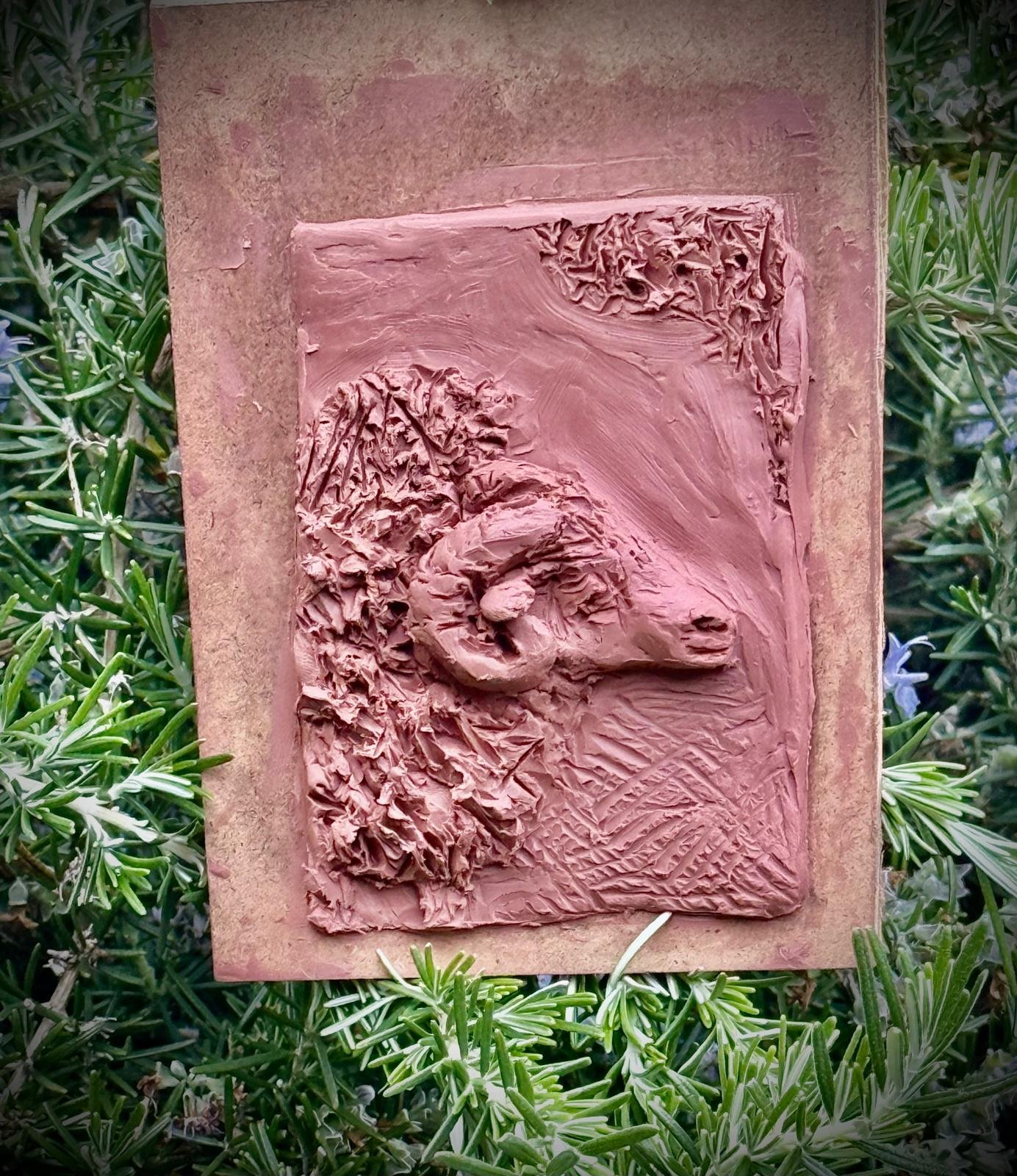
Pietrasanta is world-renowned for its marble and bronze, yet its soul rests on a humbler rhythm. Long before the galleries defined the town’s silhouette, the hills of Versilia were governed by the tinkling bells of sheep. To truly understand this region, one must look past the polished sculpture to the rugged peaks—a narrative of resilience and a deep, tactile connection to the earth.
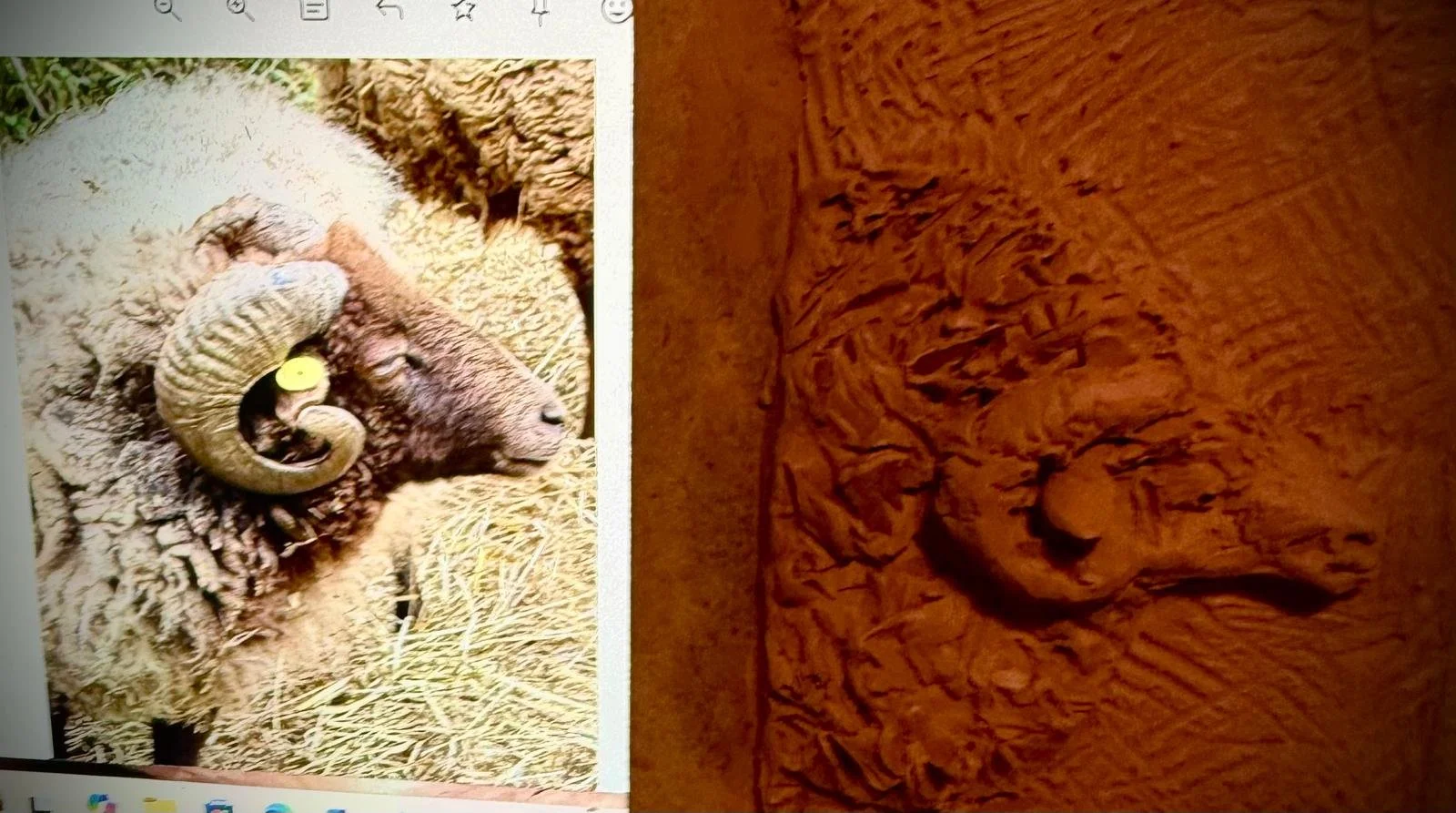
I laid out and sculpted this one hour relief in the beautiful town of Valdicastello Carducci while attending a marble workshop. They have sheep on the property that roam among the sculptors!
The "Vie delle Erbe": Transhumance and the High Pastures
For centuries, Pietrasanta served as a vital junction for transhumance (transumanza). Every season, shepherds navigated their flocks from the coastal plains of the Maremma up to the lush, high-altitude grasses of the Garfagnana and the Apuan Alps.
These sheep were the primary architects of the landscape we admire today:
The Living Lawn: The open, terraced hillsides surrounding the town were kept clear of encroaching forests by centuries of grazing. This allowed for the development of the historic mule tracks that later facilitated the transport of marble.
The Wool Economy: In the Middle Ages, the wool from these hardy flocks provided the raw material for the textile trades of nearby Lucca and Florence, grounding the region's early wealth in pastoral labor.
The Breed of the Alps: The Garfagnina Bianca
The true protagonist of this history is the Garfagnina Bianca (White Garfagnina). This is a rustic sheep with a noble profile, possessing a physical hardiness that mirrors the stone of the mountains.
Though the breed nearly vanished in the late 20th century, a resurgence in artisanal farming has saved it from extinction. For the local artisan, the Garfagnina Bianca is a symbol of biodiversity and tradition. Its milk produces Pecorino della Garfagnana, a cheese characterized by the wild herbs of the mountain slopes—a literal taste of the Versilian terroir.
The Sculptural Muse: Sheep in Art and Symbol
For a town dedicated to the marble arts, the sheep has naturally transitioned from the pasture to the pedestal. The animal appears throughout the city as both a religious and secular icon:
Sacred Imagery: In the Duomo di San Martino, the Agnus Dei (Lamb of God) is carved into the architecture, representing sacrifice and purity—a poignant contrast to the raw, unhewn stone.
The Figurative Form: Many contemporary sculptors working in Pietrasanta’s studios are drawn to the sheep’s form. Its heavy, textured coat and slender legs offer a fascinating study in volumes and weights, making it a recurring subject for those exploring the bond between humans and the natural world.
Pathfinders: Local lore suggests that early marble prospectors often followed the paths worn by sheep. The animals naturally found the most stable, rocky outcrops, inadvertently leading humans to the richest veins of statuary marble.
Echoes of the Pasture Today
The pastoral spirit still lingers for those who know where to look. If you wander the trails leading toward the hillside hamlet of Capriglia, the modern world fades. In the quiet of the morning, you can still hear the distant bells of small flocks grazing near ancient chestnut groves.
In the center of Pietrasanta, the Fiera di San Biagio held every February remains a bridge to this history. Once a massive livestock market, it continues to celebrate the agricultural roots that predate the town's artistic fame.
The sheep of Pietrasanta remind us that before the marble was a masterpiece, it was a mountain; and before the town was a gallery, it was a home for the shepherd. The pastoral tradition provides the grounded, organic counterpoint to the refined world of sculpture, reminding us of the raw, tactile reality from which all art is born.
The Golden Horn: Istanbul’s Ageless Harbor
Origin
In the rural landscapes of Tunisia, I encountered a phrase that would eventually shape my worldview: "Numero Hadesh"—Number Eleven. Initially, it was a riddle. When I asked locals how to travel between locations, the answer was invariably "Number Eleven." For months, I scanned for bus routes or marked vehicles, finding none.
The breakthrough came when I finally paid attention to the body language accompanying the advice: index and middle fingers pointing down, swinging back and forth. Two legs. Two distinct "ones" moving side-by-side. "Numero Hadesh" wasn't a vehicle; it was the act of walking.
That realization took on profound meaning when I met my wife in Tunisia. We married to walk the path of life together, and the number 11 became our symbol. From our marriage date to the serendipity of catching the clock at 11:11, the image of parallel elevens represents two individuals moving forward, side-by-side, in distinct but shared unity.
Project 11 is born from this philosophy. It is a conscious decision to walk through life with open eyes, taking the time to recognize the wonders that connect us. As an artist, I see sculpture in everything, but the true vision of this project is to bring others along for the walk—to expand our understanding, explore new vantage points, and share the beauty that surrounds us all.
Introducing Project Eleven: A Journey of Art, Place, and Connection.
Project Eleven is an immersive artistic adventure that fuses intentional exploration with the power of sculpture. By deeply immersing ourselves in the rich culture of a city or the raw beauty of a natural landscape, we capture the essence of "place" through the simple, grounding act of walking.
But this is more than just a studio practice—it is a shared experience. Over the course of several weeks or months, we engage the community through live plein-air sculpting sessions, behind-the-scenes documentation, and on-site technical studies. The journey can culminate in a transformative gallery exhibition designed to be a contemplative sanctuary—a space that sparks wonder and prompts us to reflect on our own impact within the community and the environment that surrounds us.
Core Subject and Themes
The project will feature a collection of sculptures that draw inspiration from life and the inherent sculptural qualities of the observed world.
Primary Themes:
Impermanence and Change: Sculptures will utilize materials that evoke a sense of history, transformation, or motion (e.g., patinated metals, fired raw clays, balanced kinetic elements) to reflect the constant flux of nature and life.
Sculpting Our World: With a focus on process and experience, plein-air sculpting captures the spontaneity of life while recognizing the sculpture that surrounds us but is often unseen.
Interconnectedness: The arrangement and forms of the sculptures will suggest a dialogue between individual pieces, illustrating how discrete elements contribute to a cohesive, interdependent community life.
Artistic Vision and Style
The style is mainly figurative with some stylistic abstraction to emphasize specific themes. The artistic vision is to capture a sculptural sketch of life as it unfolds in real-time.
Audience:
The project is intended for a broad audience, including:
Individuals interested in the creative process, specifically related to the interaction and recognition of sculpture in everyday life.
Art enthusiasts and collectors interested in contemporary sculpture and cultural documentation.
Students and educators in art, history, and sculptural process.
Project Structure and Lay
The project will be structured into three components: historic narrative, photos/sketches of the theme, and sculptural ‘maquettes’ with scaled pieces, guiding the visitor through a sensory and conceptual journey:
I. Context (Historic Narrative)
Focus: Provide context for the current observed reality.
Key Messages: Recognition of historic context to explore the change or permanence of the observed theme.
II. Process (Capturing a Sculptural Snapshot)
Focus: Document methods and experience in identifying and capturing a theme in clay.
Key Messages: A focus on experience, movement, and the capture of a moment in life.
III. Sculptural Products (Physical Pieces)
Focus: Three-dimensional representations of life.
Key Messages: Artist and audience interpretation of an event to spark thoughtfulness on observing the wonders of our surroundings and the sculpture in our world.
Essential Information / Key Messages
Sculpture surrounds and influences us in ways that are often not recognized.
The process of sculpting is as fulfilling as the final results.
Final products of the sculpting process elicit emotions and motivations that can only be interpreted by the viewer.
Conclusion
"Project Eleven" offers a timely and compelling artistic inquiry into our relationship with our environment. By presenting life through tactile sculpture, contextual narrative, and documented process, the project aims to inspire awe, foster introspection, and reinforce the vital connection prompting visitors to reflect on their own place and impact within the community.
It All Begins Here- Visit this blog and sign up for our newsletter for the latest updates!
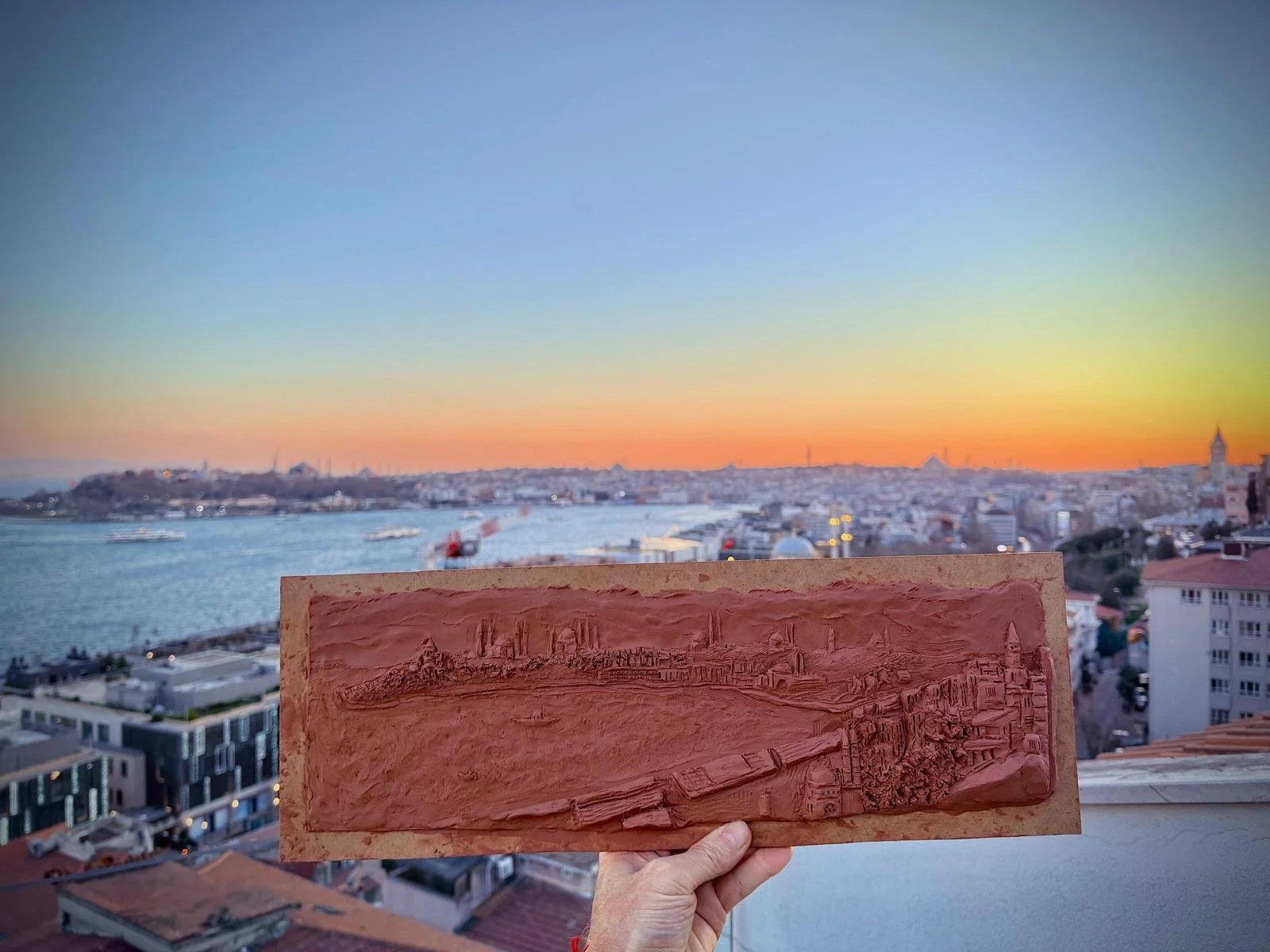
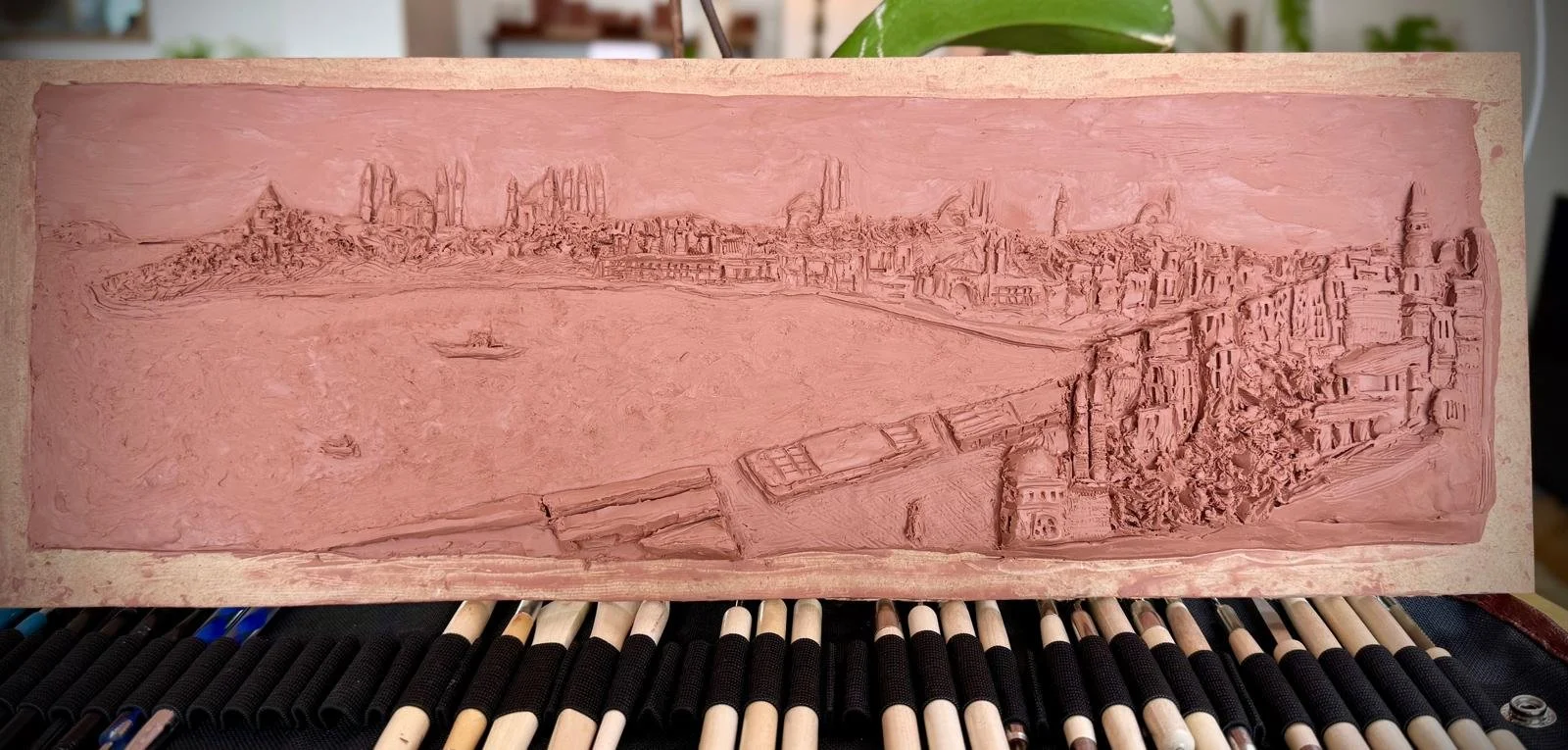
Known to locals as the Haliç, the Golden Horn is more than just a primary inlet of the Bosphorus; it is the very reason Istanbul exists. This scimitar-shaped horn has carved its way through history, acting as a natural harbor that protected Greek, Roman, Byzantine, and Ottoman fleets for over 2,000 years.
I laid out and sculpted this relief from an apartment in the neighborhood of Cihangir. The detail required about a day of work.
A Legacy of Gold and Iron
The name "Golden Horn" likely stems from the way the sunset reflects off the water in a shimmering gilt hue. Historically, it was the heartbeat of Constantinople.
The Chain: During the Byzantine era, a massive iron chain was stretched across the mouth of the Horn to prevent enemy ships from entering.
The Conquest: In 1453, Sultan Mehmed the Conqueror famously bypassed this chain by hauling his ships over land on greased logs—a move that changed the course of history forever.
A Cultural Kaleidoscope
The shores of the Golden Horn have always been a melting pot. While the Sultan resided in Topkapi nearby, the Horn’s neighborhoods became a sanctuary for diverse communities:
Balat & Fener: Traditionally the Jewish and Greek quarters, these neighborhoods are now famous for their technicolor houses, cobblestone streets, and the Ecumenical Patriarchate of Constantinople.
Eyüp Sultan: At the tip of the Horn lies one of the holiest sites in the Islamic world, centered around the Eyüp Sultan Mosque. It offers a spiritual, serene contrast to the bustling city center.
Industrial Rebirth: Once a polluted industrial hub in the mid-20th century, the area has undergone a massive "urban greening." Old factories have been transformed into world-class museums like SantralIstanbul and the Rahmi M. Koç Museum.
Modern Charm & The View from Cihangir
Today, the Golden Horn is best experienced through a lens of "Bohemian Istanbul." While the shores offer history, the steep, cat-filled streets of Cihangir provide the ultimate vantage point. This neighborhood—a favorite of artists, writers, and expats—perches high above the water.
From a terrace cafe in Cihangir, you can watch the sun dip behind the minarets of the Old City, turning the Horn into a literal ribbon of gold. It’s the perfect place to bridge the gap between the ancient walls of the Golden Horn and the modern, creative energy of the "New City."
The Stone Witness to Empires: Galata Tower
Origin
In the rural landscapes of Tunisia, I encountered a phrase that would eventually shape my worldview: "Numero Hadesh"—Number Eleven. Initially, it was a riddle. When I asked locals how to travel between locations, the answer was invariably "Number Eleven." For months, I scanned for bus routes or marked vehicles, finding none.
The breakthrough came when I finally paid attention to the body language accompanying the advice: index and middle fingers pointing down, swinging back and forth. Two legs. Two distinct "ones" moving side-by-side. "Numero Hadesh" wasn't a vehicle; it was the act of walking.
That realization took on profound meaning when I met my wife in Tunisia. We married to walk the path of life together, and the number 11 became our symbol. From our marriage date to the serendipity of catching the clock at 11:11, the image of parallel elevens represents two individuals moving forward, side-by-side, in distinct but shared unity.
Project 11 is born from this philosophy. It is a conscious decision to walk through life with open eyes, taking the time to recognize the wonders that connect us. As an artist, I see sculpture in everything, but the true vision of this project is to bring others along for the walk—to expand our understanding, explore new vantage points, and share the beauty that surrounds us all.
Introducing Project Eleven: A Journey of Art, Place, and Connection.
Project Eleven is an immersive artistic adventure that fuses intentional exploration with the power of sculpture. By deeply immersing ourselves in the rich culture of a city or the raw beauty of a natural landscape, we capture the essence of "place" through the simple, grounding act of walking.
But this is more than just a studio practice—it is a shared experience. Over the course of several weeks or months, we engage the community through live plein-air sculpting sessions, behind-the-scenes documentation, and on-site technical studies. The journey can culminate in a transformative gallery exhibition designed to be a contemplative sanctuary—a space that sparks wonder and prompts us to reflect on our own impact within the community and the environment that surrounds us.
Core Subject and Themes
The project will feature a collection of sculptures that draw inspiration from life and the inherent sculptural qualities of the observed world.
Primary Themes:
Impermanence and Change: Sculptures will utilize materials that evoke a sense of history, transformation, or motion (e.g., patinated metals, fired raw clays, balanced kinetic elements) to reflect the constant flux of nature and life.
Sculpting Our World: With a focus on process and experience, plein-air sculpting captures the spontaneity of life while recognizing the sculpture that surrounds us but is often unseen.
Interconnectedness: The arrangement and forms of the sculptures will suggest a dialogue between individual pieces, illustrating how discrete elements contribute to a cohesive, interdependent community life.
Artistic Vision and Style
The style is mainly figurative with some stylistic abstraction to emphasize specific themes. The artistic vision is to capture a sculptural sketch of life as it unfolds in real-time.
Audience:
The project is intended for a broad audience, including:
Individuals interested in the creative process, specifically related to the interaction and recognition of sculpture in everyday life.
Art enthusiasts and collectors interested in contemporary sculpture and cultural documentation.
Students and educators in art, history, and sculptural process.
Project Structure and Lay
The project will be structured into three components: historic narrative, photos/sketches of the theme, and sculptural ‘maquettes’ with scaled pieces, guiding the visitor through a sensory and conceptual journey:
I. Context (Historic Narrative)
Focus: Provide context for the current observed reality.
Key Messages: Recognition of historic context to explore the change or permanence of the observed theme.
II. Process (Capturing a Sculptural Snapshot)
Focus: Document methods and experience in identifying and capturing a theme in clay.
Key Messages: A focus on experience, movement, and the capture of a moment in life.
III. Sculptural Products (Physical Pieces)
Focus: Three-dimensional representations of life.
Key Messages: Artist and audience interpretation of an event to spark thoughtfulness on observing the wonders of our surroundings and the sculpture in our world.
Essential Information / Key Messages
Sculpture surrounds and influences us in ways that are often not recognized.
The process of sculpting is as fulfilling as the final results.
Final products of the sculpting process elicit emotions and motivations that can only be interpreted by the viewer.
Conclusion
"Project Eleven" offers a timely and compelling artistic inquiry into our relationship with our environment. By presenting life through tactile sculpture, contextual narrative, and documented process, the project aims to inspire awe, foster introspection, and reinforce the vital connection prompting visitors to reflect on their own place and impact within the community.
It All Begins Here- Visit this blog and sign up for our newsletter for the latest updates!
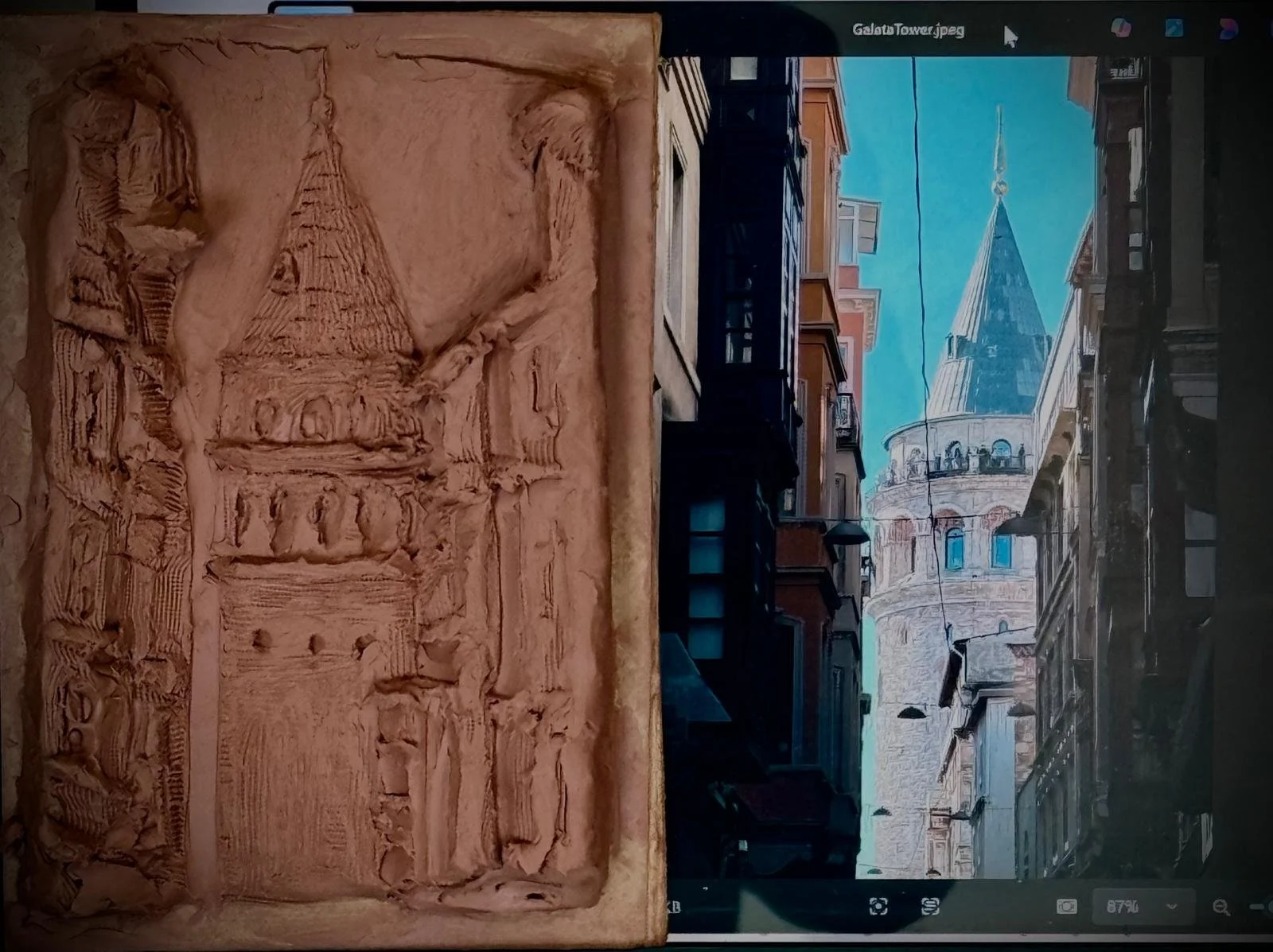
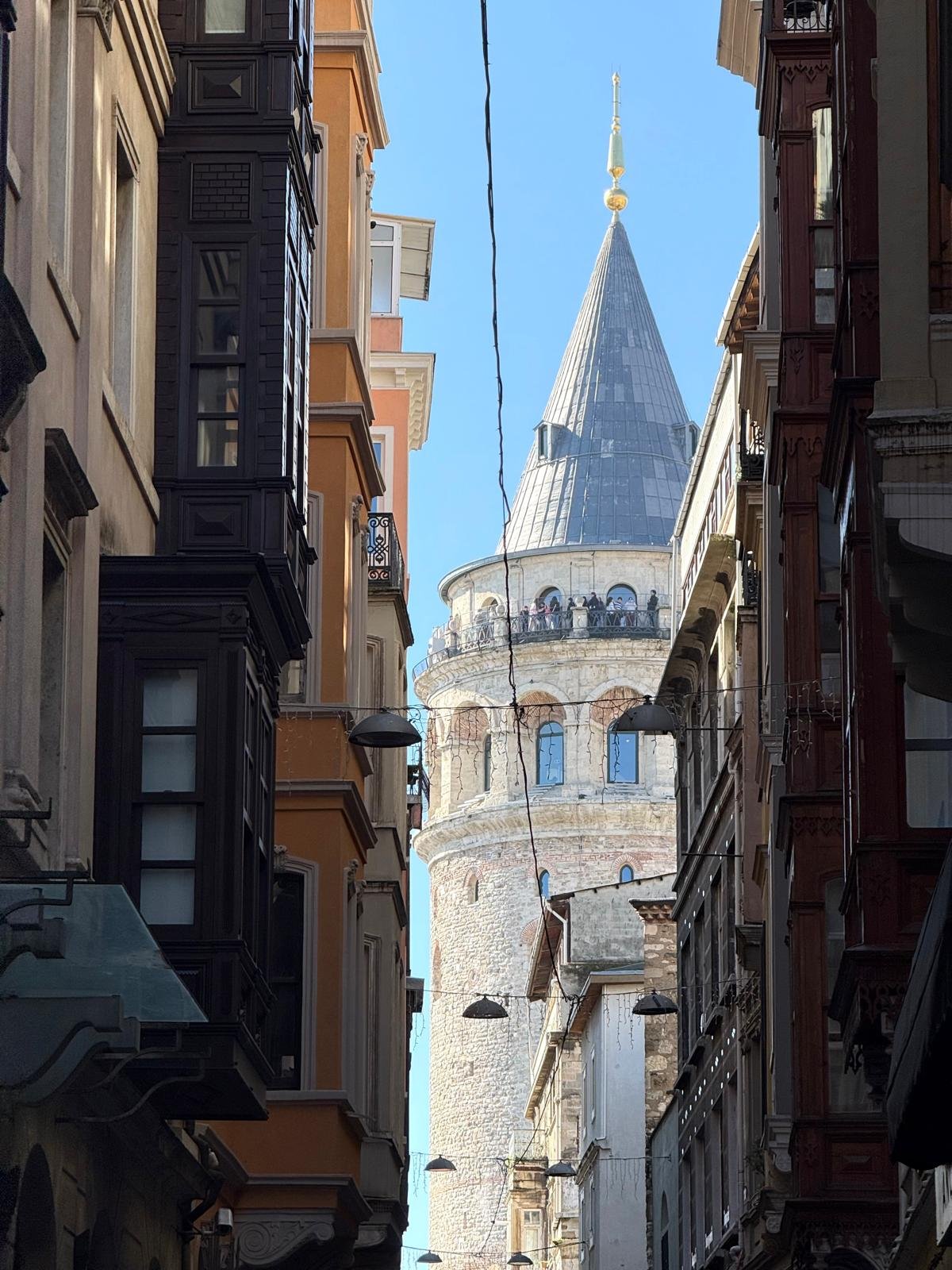
Standing tall over the Karaköy skyline, the Galata Tower (Galata Kulesi) is more than just a great photo op—it is a stone witness to the rise and fall of empires. It has transitioned from a military bastion to a fire lookout, and finally, to the cultural icon of Istanbul it is today.
I laid out this quick-sculpt at the tower and put in another hour back at my studio.
Historical Timeline
The tower we see today isn't the first one to stand on that hill, but it is certainly the most resilient.
The Genoese Origins (1348): Built by the Genoese colony in Constantinople, the tower was originally named Christea Turris (Tower of Christ). It was the highest point of the fortifications surrounding their citadel, Galata.
The Ottoman Era (1453 onwards): After Mehmed the Conqueror took the city, the tower served various roles. It was used as a jail, an observatory by the astronomer Taqi ad-Din, and eventually a fire lookout station.
The Legend of Hezarfen: In the 17th century, according to the traveler Evliya Çelebi, Hezarfen Ahmed Çelebi allegedly donned wooden wings and flew from the top of the tower, across the Bosphorus, to Üsküdar. Whether fact or folklore, it cemented the tower's place in aviation mythology.
Modern Restoration: Having survived numerous earthquakes and fires, the tower underwent a major restoration in the 1960s to replace its wooden interior with concrete and was updated again in 2020 to become a formal museum.
Cultural Significance
The Galata Tower isn't just a building; it’s a symbol of the "other" side of Istanbul—the European, cosmopolitan, and rebellious sibling to the historic peninsula of Sultanahmet.
The "Bridge" Between Cultures
For centuries, Galata was the neighborhood of merchants, diplomats, and minority communities (Greeks, Jews, Armenians, and Italians). The tower overlooks this melting pot, representing the city’s long history of global trade and cultural exchange.
A Romantic Icon
In Turkish pop culture, the tower is often personified. A famous legend suggests that if you climb the tower for the first time with your lover, you are destined to marry them. It is also frequently depicted in poetry and art as being "in love" with the Maiden’s Tower (Kız Kulesi) across the water, forever gazing at her from afar.
Where the Two Seas Meet: Three thousand years of history staying afloat
Origin
In the rural landscapes of Tunisia, I encountered a phrase that would eventually shape my worldview: "Numero Hadesh"—Number Eleven. Initially, it was a riddle. When I asked locals how to travel between locations, the answer was invariably "Number Eleven." For months, I scanned for bus routes or marked vehicles, finding none.
The breakthrough came when I finally paid attention to the body language accompanying the advice: index and middle fingers pointing down, swinging back and forth. Two legs. Two distinct "ones" moving side-by-side. "Numero Hadesh" wasn't a vehicle; it was the act of walking.
That realization took on profound meaning when I met my wife in Tunisia. We married to walk the path of life together, and the number 11 became our symbol. From our marriage date to the serendipity of catching the clock at 11:11, the image of parallel elevens represents two individuals moving forward, side-by-side, in distinct but shared unity.
Project 11 is born from this philosophy. It is a conscious decision to walk through life with open eyes, taking the time to recognize the wonders that connect us. As an artist, I see sculpture in everything, but the true vision of this project is to bring others along for the walk—to expand our understanding, explore new vantage points, and share the beauty that surrounds us all.
Introducing Project Eleven: A Journey of Art, Place, and Connection.
Project Eleven is an immersive artistic adventure that fuses intentional exploration with the power of sculpture. By deeply immersing ourselves in the rich culture of a city or the raw beauty of a natural landscape, we capture the essence of "place" through the simple, grounding act of walking.
But this is more than just a studio practice—it is a shared experience. Over the course of several weeks or months, we engage the community through live plein-air sculpting sessions, behind-the-scenes documentation, and on-site technical studies. The journey can culminate in a transformative gallery exhibition designed to be a contemplative sanctuary—a space that sparks wonder and prompts us to reflect on our own impact within the community and the environment that surrounds us.
Core Subject and Themes
The project will feature a collection of sculptures that draw inspiration from life and the inherent sculptural qualities of the observed world.
Primary Themes:
Impermanence and Change: Sculptures will utilize materials that evoke a sense of history, transformation, or motion (e.g., patinated metals, fired raw clays, balanced kinetic elements) to reflect the constant flux of nature and life.
Sculpting Our World: With a focus on process and experience, plein-air sculpting captures the spontaneity of life while recognizing the sculpture that surrounds us but is often unseen.
Interconnectedness: The arrangement and forms of the sculptures will suggest a dialogue between individual pieces, illustrating how discrete elements contribute to a cohesive, interdependent community life.
Artistic Vision and Style
The style is mainly figurative with some stylistic abstraction to emphasize specific themes. The artistic vision is to capture a sculptural sketch of life as it unfolds in real-time.
Audience:
The project is intended for a broad audience, including:
Individuals interested in the creative process, specifically related to the interaction and recognition of sculpture in everyday life.
Art enthusiasts and collectors interested in contemporary sculpture and cultural documentation.
Students and educators in art, history, and sculptural process.
Project Structure and Lay
The project will be structured into three components: historic narrative, photos/sketches of the theme, and sculptural ‘maquettes’ with scaled pieces, guiding the visitor through a sensory and conceptual journey:
I. Context (Historic Narrative)
Focus: Provide context for the current observed reality.
Key Messages: Recognition of historic context to explore the change or permanence of the observed theme.
II. Process (Capturing a Sculptural Snapshot)
Focus: Document methods and experience in identifying and capturing a theme in clay.
Key Messages: A focus on experience, movement, and the capture of a moment in life.
III. Sculptural Products (Physical Pieces)
Focus: Three-dimensional representations of life.
Key Messages: Artist and audience interpretation of an event to spark thoughtfulness on observing the wonders of our surroundings and the sculpture in our world.
Essential Information / Key Messages
Sculpture surrounds and influences us in ways that are often not recognized.
The process of sculpting is as fulfilling as the final results.
Final products of the sculpting process elicit emotions and motivations that can only be interpreted by the viewer.
Conclusion
"Project Eleven" offers a timely and compelling artistic inquiry into our relationship with our environment. By presenting life through tactile sculpture, contextual narrative, and documented process, the project aims to inspire awe, foster introspection, and reinforce the vital connection prompting visitors to reflect on their own place and impact within the community.
It All Begins Here- Visit this blog and sign up for our newsletter for the latest updates!
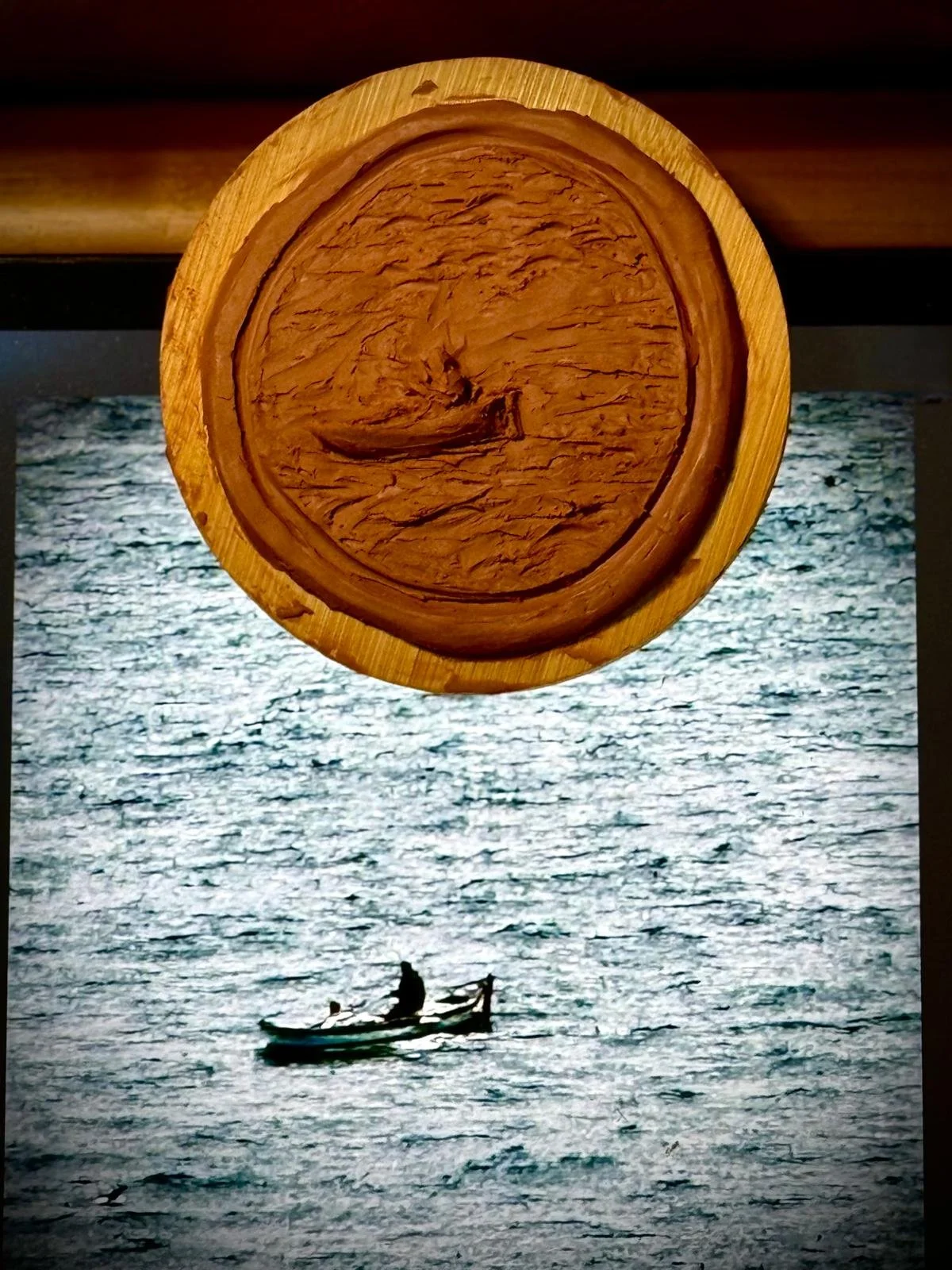
Solitary, colorful, and impossibly small, these wooden sandals bobbing in the treacherous Bosporus are symbols of pure staying power. Watching a lone fisherman hold his ground—or rather, his water—against the strait's churning currents and maritime traffic is an awe-inspiring sight. It is a living masterclass in tradition, proving that while empires and skylines shift, this quiet, rhythmic heritage remains anchored in the soul of Istanbul.
I laid out this quick-sculpt at Galata port and put another 1/2 hour into it back in the studio.
Standing at the edge of the Marmara Sea, where it narrows into the legendary Bosporus, you’ll see the massive container ships and high-speed ferries that define Istanbul’s modern pulse. But look closer, tucked against the sea walls of Ahırkapı or the quiet nooks of Üsküdar, and you’ll find the true soul of the strait: the sandals.
These small-scale wooden boats are more than just vessels; they are floating artifacts of a maritime culture that has survived empires.
A Living Heritage of the Strait
For centuries, the southern end of the Bosporus has served as a biological crossroads. The complex current system—where the cold, fresh water of the Black Sea flows south on the surface while warm, salty Mediterranean water creeps north underneath—creates a unique "fish highway."
Traditional fishermen here have mastered the art of reading these currents, a skill passed down through generations of İstanbullu families. This isn't industrial extraction; it's a rhythmic, seasonal dialogue with the sea.
The Seasonal Pulse: Whether it’s the autumn run of lüfer (bluefish) or the winter appearance of hamsi (anchovies), the small-boat fisherman’s life is governed by the lunar cycle and the North Wind (Poyraz).
The Craft: Many of these boats are still built or maintained using traditional techniques, featuring the classic curved hulls designed to cut through the treacherous "Devil’s Current" (Şeytan Akıntısı).
The "Balık-Ekmek" Legacy
While the tourist boats at Eminönü are famous, the cultural heart of small-scale fishing lies in the communal spirit of the barınak (fishing shelters). Here, the catch isn't just a commodity; it’s a social bond.
Historical accounts from the Ottoman era describe the Bosporus as being so thick with fish that you could practically scoop them up with baskets. While the abundance has changed, the rituals remain: the mending of nets by hand, the shared glasses of tea at dawn, and the deep-seated respect for the sea's temperamental nature.
"The Bosporus doesn't belong to the land; it is a world unto itself, with its own laws and its own language spoken only by those who row upon it."
Why It Matters Today
In an era of rapid urban development, these small-scale fishermen are the guardians of Istanbul’s ecological memory. They are the first to notice changes in water quality or shifting migration patterns. Supporting this micro-industry isn't just about food—it's about preserving the "blue" identity of a city that is increasingly made of concrete.
Next time you're walking the southern shores, skip the crowded piers. Look for the lone fisherman in his brightly painted sandal, patiently waiting for the bluefish to strike. You're not just looking at a hobby; you're looking at three thousand years of history staying afloat.
Galata Bridge Fishing!
Origin
In the rural landscapes of Tunisia, I encountered a phrase that would eventually shape my worldview: "Numero Hadesh"—Number Eleven. Initially, it was a riddle. When I asked locals how to travel between locations, the answer was invariably "Number Eleven." For months, I scanned for bus routes or marked vehicles, finding none.
The breakthrough came when I finally paid attention to the body language accompanying the advice: index and middle fingers pointing down, swinging back and forth. Two legs. Two distinct "ones" moving side-by-side. "Numero Hadesh" wasn't a vehicle; it was the act of walking.
That realization took on profound meaning when I met my wife in Tunisia. We married to walk the path of life together, and the number 11 became our symbol. From our marriage date to the serendipity of catching the clock at 11:11, the image of parallel elevens represents two individuals moving forward, side-by-side, in distinct but shared unity.
Project 11 is born from this philosophy. It is a conscious decision to walk through life with open eyes, taking the time to recognize the wonders that connect us. As an artist, I see sculpture in everything, but the true vision of this project is to bring others along for the walk—to expand our understanding, explore new vantage points, and share the beauty that surrounds us all.
Introducing Project Eleven: A Journey of Art, Place, and Connection.
Project Eleven is an immersive artistic adventure that fuses intentional exploration with the power of sculpture. By deeply immersing ourselves in the rich culture of a city or the raw beauty of a natural landscape, we capture the essence of "place" through the simple, grounding act of walking.
But this is more than just a studio practice—it is a shared experience. Over the course of several weeks or months, we engage the community through live plein-air sculpting sessions, behind-the-scenes documentation, and on-site technical studies. The journey can culminate in a transformative gallery exhibition designed to be a contemplative sanctuary—a space that sparks wonder and prompts us to reflect on our own impact within the community and the environment that surrounds us.
Core Subject and Themes
The project will feature a collection of sculptures that draw inspiration from life and the inherent sculptural qualities of the observed world.
Primary Themes:
Impermanence and Change: Sculptures will utilize materials that evoke a sense of history, transformation, or motion (e.g., patinated metals, fired raw clays, balanced kinetic elements) to reflect the constant flux of nature and life.
Sculpting Our World: With a focus on process and experience, plein-air sculpting captures the spontaneity of life while recognizing the sculpture that surrounds us but is often unseen.
Interconnectedness: The arrangement and forms of the sculptures will suggest a dialogue between individual pieces, illustrating how discrete elements contribute to a cohesive, interdependent community life.
Artistic Vision and Style
The style is mainly figurative with some stylistic abstraction to emphasize specific themes. The artistic vision is to capture a sculptural sketch of life as it unfolds in real-time.
Audience:
The project is intended for a broad audience, including:
Individuals interested in the creative process, specifically related to the interaction and recognition of sculpture in everyday life.
Art enthusiasts and collectors interested in contemporary sculpture and cultural documentation.
Students and educators in art, history, and sculptural process.
Project Structure and Lay
The project will be structured into three components: historic narrative, photos/sketches of the theme, and sculptural ‘maquettes’ with scaled pieces, guiding the visitor through a sensory and conceptual journey:
I. Context (Historic Narrative)
Focus: Provide context for the current observed reality.
Key Messages: Recognition of historic context to explore the change or permanence of the observed theme.
II. Process (Capturing a Sculptural Snapshot)
Focus: Document methods and experience in identifying and capturing a theme in clay.
Key Messages: A focus on experience, movement, and the capture of a moment in life.
III. Sculptural Products (Physical Pieces)
Focus: Three-dimensional representations of life.
Key Messages: Artist and audience interpretation of an event to spark thoughtfulness on observing the wonders of our surroundings and the sculpture in our world.
Essential Information / Key Messages
Sculpture surrounds and influences us in ways that are often not recognized.
The process of sculpting is as fulfilling as the final results.
Final products of the sculpting process elicit emotions and motivations that can only be interpreted by the viewer.
Conclusion
"Project Eleven" offers a timely and compelling artistic inquiry into our relationship with our environment. By presenting life through tactile sculpture, contextual narrative, and documented process, the project aims to inspire awe, foster introspection, and reinforce the vital connection prompting visitors to reflect on their own place and impact within the community.
It All Begins Here- Visit this blog and sign up for our newsletter for the latest updates!
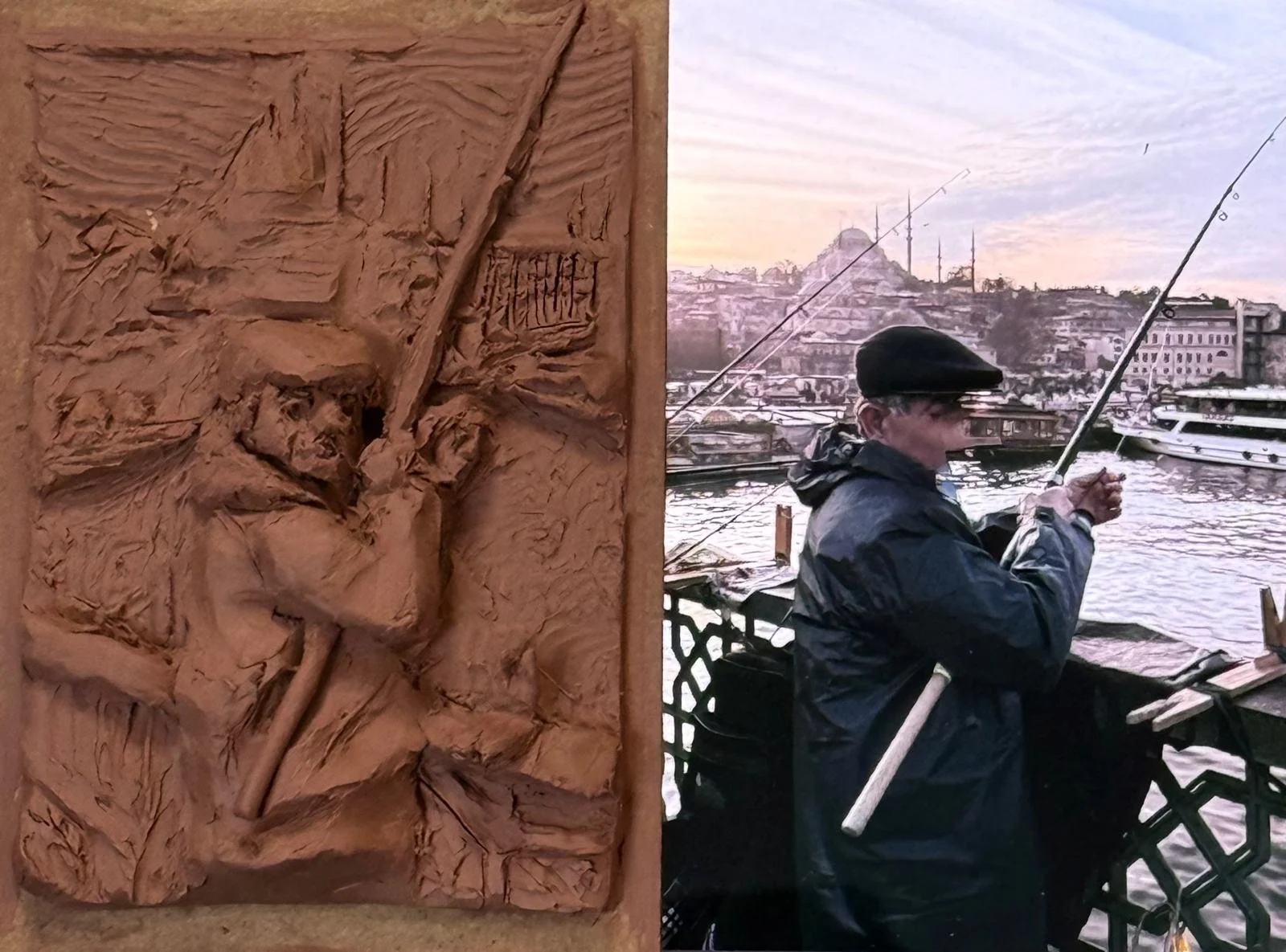
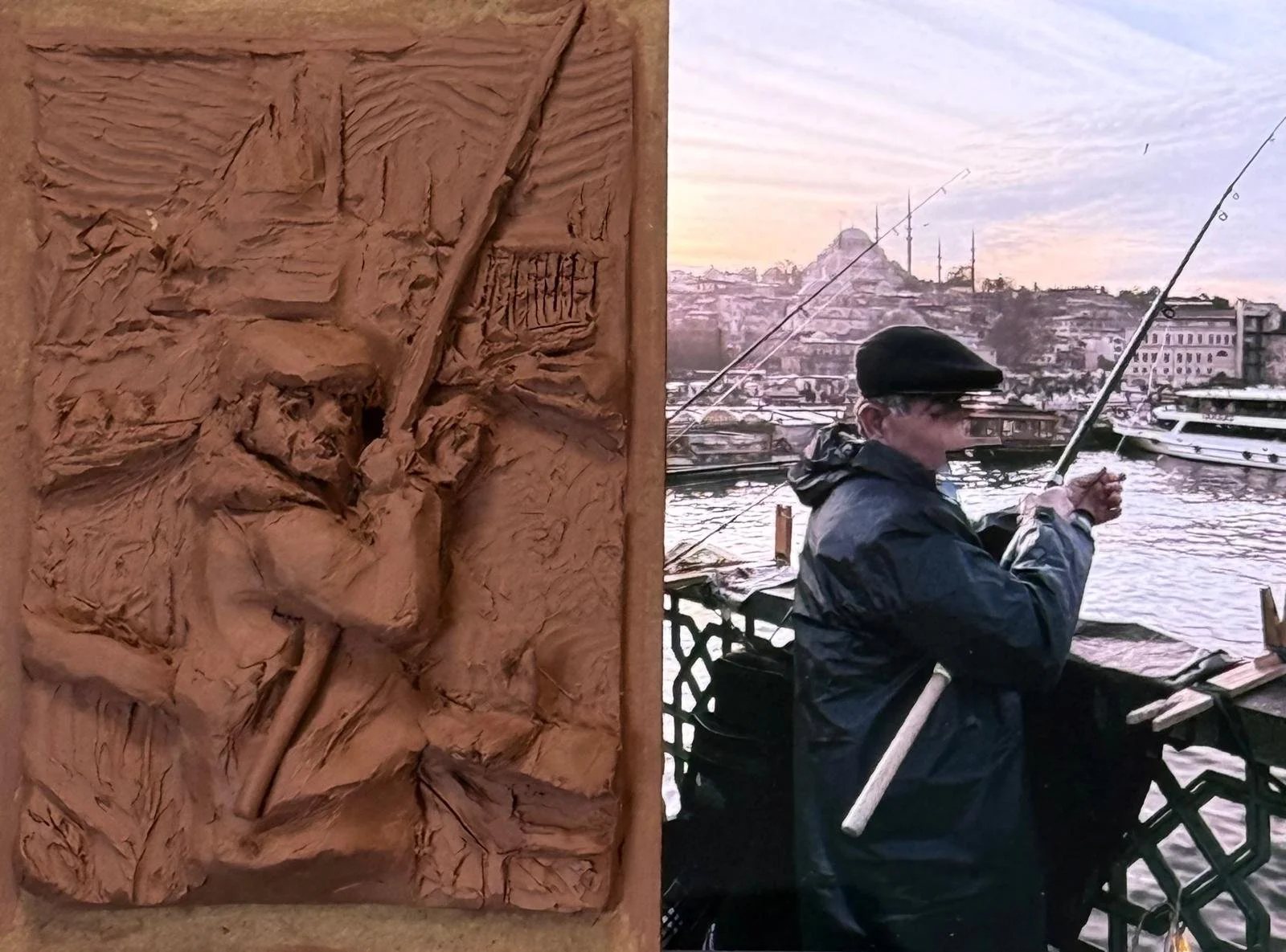
Day or night - rain or shine the dedicated fisherman on the Galata bridge are a mainstay of Istanbul!
I laid out this quick-sculpt on the bridge and put another hour into it back in the studio. Another cold day!
The Galata Bridge (Galata Köprüsü) is more than just a link between the historic peninsula and the northern districts; it is a living monument to Istanbul’s maritime identity. For centuries, fishing from its spans has been a constant thread in the city's social fabric.
The Evolution of the Bridge
The current bridge, completed in 1994, is the fifth iteration of a crossing at this site. Throughout these transformations, the bridge has evolved from a simple wooden structure into a multi-level commercial hub. While the lower level houses restaurants and cafes, the upper deck has remained the domain of the city's amateur anglers.
A Social and Cultural Anchor
Fishing off the Galata Bridge is rarely just about the catch; it is a storied social ritual.
The "Everyman’s" Hobby: Historically, the bridge has served as a Great Equalizer. You will find retirees, blue-collar workers, and tourists standing shoulder-to-shoulder, sharing tobacco, tea, and tips.
The Ecosystem: A unique micro-economy surrounds the fishermen. For decades, "bucket boys" have sold bait, vendors have peddled Simit and tea, and specialized shops nearby have supplied the specific rigs needed to handle the Golden Horn’s currents.
Culinary Impact: The abundance of the Bosphorus—traditionally rich in mackerel, horse mackerel (istavrit), and bluefish—led to the iconic Istanbul street food: Balık Ekmek (grilled fish sandwiches), originally sold directly from boats moored at the bridge’s base.
Ecological Transitions
The history of fishing here also mirrors the environmental health of the Golden Horn.
The Industrial Era: During the mid-20th century, heavy pollution nearly silenced the waters, significantly reducing the variety of fish.
The Recovery: Massive cleanup efforts in the 1980s and 90s saw a resurgence of marine life. Today, while stocks are more regulated and under pressure from overfishing, the sight of hundreds of lines casting into the water remains the quintessential image of Istanbul.
Chestnuts and New Year Tram
Origin
In the rural landscapes of Tunisia, I encountered a phrase that would eventually shape my worldview: "Numero Hadesh"—Number Eleven. Initially, it was a riddle. When I asked locals how to travel between locations, the answer was invariably "Number Eleven." For months, I scanned for bus routes or marked vehicles, finding none.
The breakthrough came when I finally paid attention to the body language accompanying the advice: index and middle fingers pointing down, swinging back and forth. Two legs. Two distinct "ones" moving side-by-side. "Numero Hadesh" wasn't a vehicle; it was the act of walking.
That realization took on profound meaning when I met my wife in Tunisia. We married to walk the path of life together, and the number 11 became our symbol. From our marriage date to the serendipity of catching the clock at 11:11, the image of parallel elevens represents two individuals moving forward, side-by-side, in distinct but shared unity.
Project 11 is born from this philosophy. It is a conscious decision to walk through life with open eyes, taking the time to recognize the wonders that connect us. As an artist, I see sculpture in everything, but the true vision of this project is to bring others along for the walk—to expand our understanding, explore new vantage points, and share the beauty that surrounds us all.
Introducing Project Eleven: A Journey of Art, Place, and Connection.
Project Eleven is an immersive artistic adventure that fuses intentional exploration with the power of sculpture. By deeply immersing ourselves in the rich culture of a city or the raw beauty of a natural landscape, we capture the essence of "place" through the simple, grounding act of walking.
But this is more than just a studio practice—it is a shared experience. Over the course of several weeks or months, we engage the community through live plein-air sculpting sessions, behind-the-scenes documentation, and on-site technical studies. The journey can culminate in a transformative gallery exhibition designed to be a contemplative sanctuary—a space that sparks wonder and prompts us to reflect on our own impact within the community and the environment that surrounds us.
Core Subject and Themes
The project will feature a collection of sculptures that draw inspiration from life and the inherent sculptural qualities of the observed world.
Primary Themes:
Impermanence and Change: Sculptures will utilize materials that evoke a sense of history, transformation, or motion (e.g., patinated metals, fired raw clays, balanced kinetic elements) to reflect the constant flux of nature and life.
Sculpting Our World: With a focus on process and experience, plein-air sculpting captures the spontaneity of life while recognizing the sculpture that surrounds us but is often unseen.
Interconnectedness: The arrangement and forms of the sculptures will suggest a dialogue between individual pieces, illustrating how discrete elements contribute to a cohesive, interdependent community life.
Artistic Vision and Style
The style is mainly figurative with some stylistic abstraction to emphasize specific themes. The artistic vision is to capture a sculptural sketch of life as it unfolds in real-time.
Audience:
The project is intended for a broad audience, including:
Individuals interested in the creative process, specifically related to the interaction and recognition of sculpture in everyday life.
Art enthusiasts and collectors interested in contemporary sculpture and cultural documentation.
Students and educators in art, history, and sculptural process.
Project Structure and Lay
The project will be structured into three components: historic narrative, photos/sketches of the theme, and sculptural ‘maquettes’ with scaled pieces, guiding the visitor through a sensory and conceptual journey:
I. Context (Historic Narrative)
Focus: Provide context for the current observed reality.
Key Messages: Recognition of historic context to explore the change or permanence of the observed theme.
II. Process (Capturing a Sculptural Snapshot)
Focus: Document methods and experience in identifying and capturing a theme in clay.
Key Messages: A focus on experience, movement, and the capture of a moment in life.
III. Sculptural Products (Physical Pieces)
Focus: Three-dimensional representations of life.
Key Messages: Artist and audience interpretation of an event to spark thoughtfulness on observing the wonders of our surroundings and the sculpture in our world.
Essential Information / Key Messages
Sculpture surrounds and influences us in ways that are often not recognized.
The process of sculpting is as fulfilling as the final results.
Final products of the sculpting process elicit emotions and motivations that can only be interpreted by the viewer.
Conclusion
"Project Eleven" offers a timely and compelling artistic inquiry into our relationship with our environment. By presenting life through tactile sculpture, contextual narrative, and documented process, the project aims to inspire awe, foster introspection, and reinforce the vital connection prompting visitors to reflect on their own place and impact within the community.
It All Begins Here- Visit this blog and sign up for our newsletter for the latest updates!
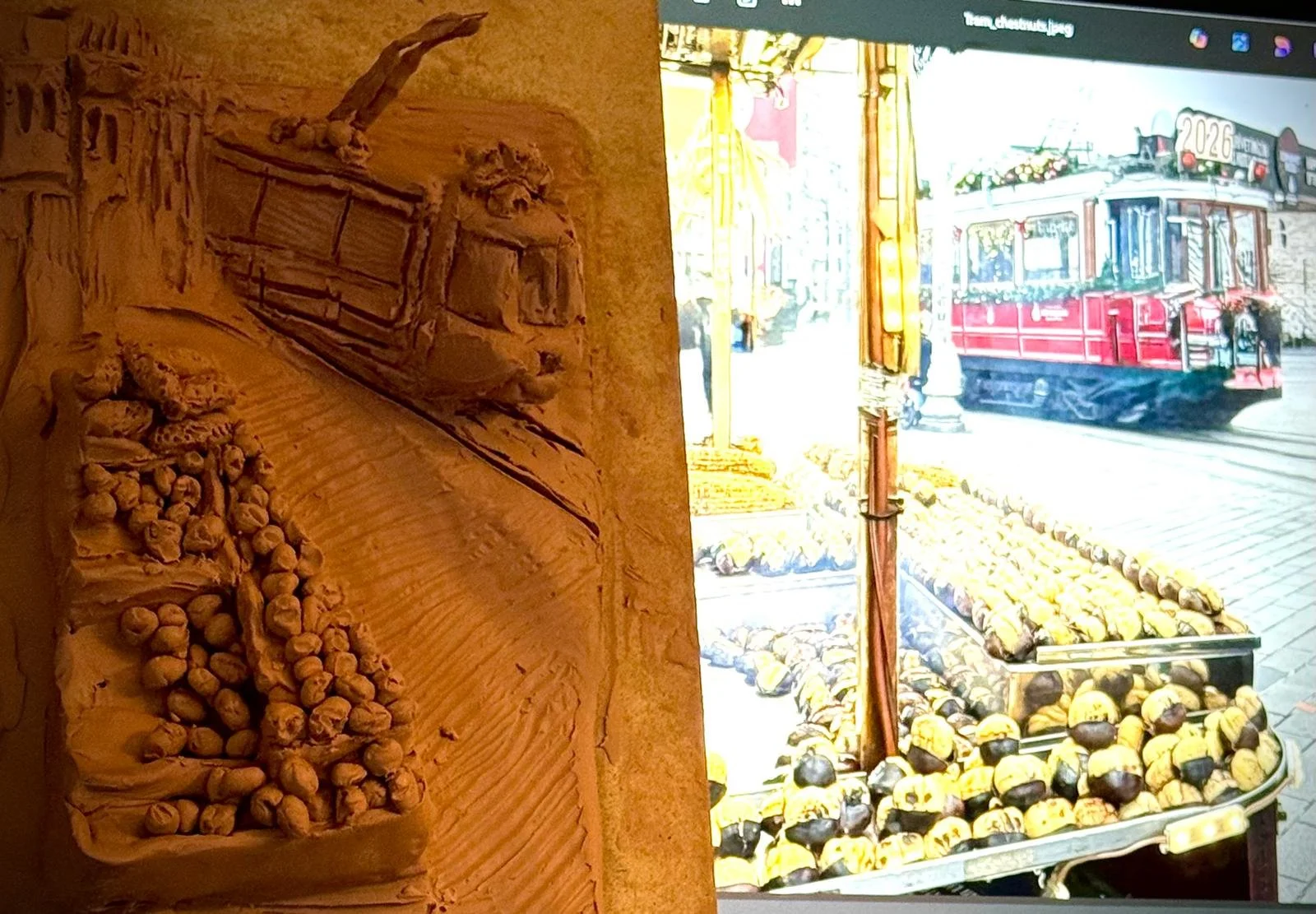
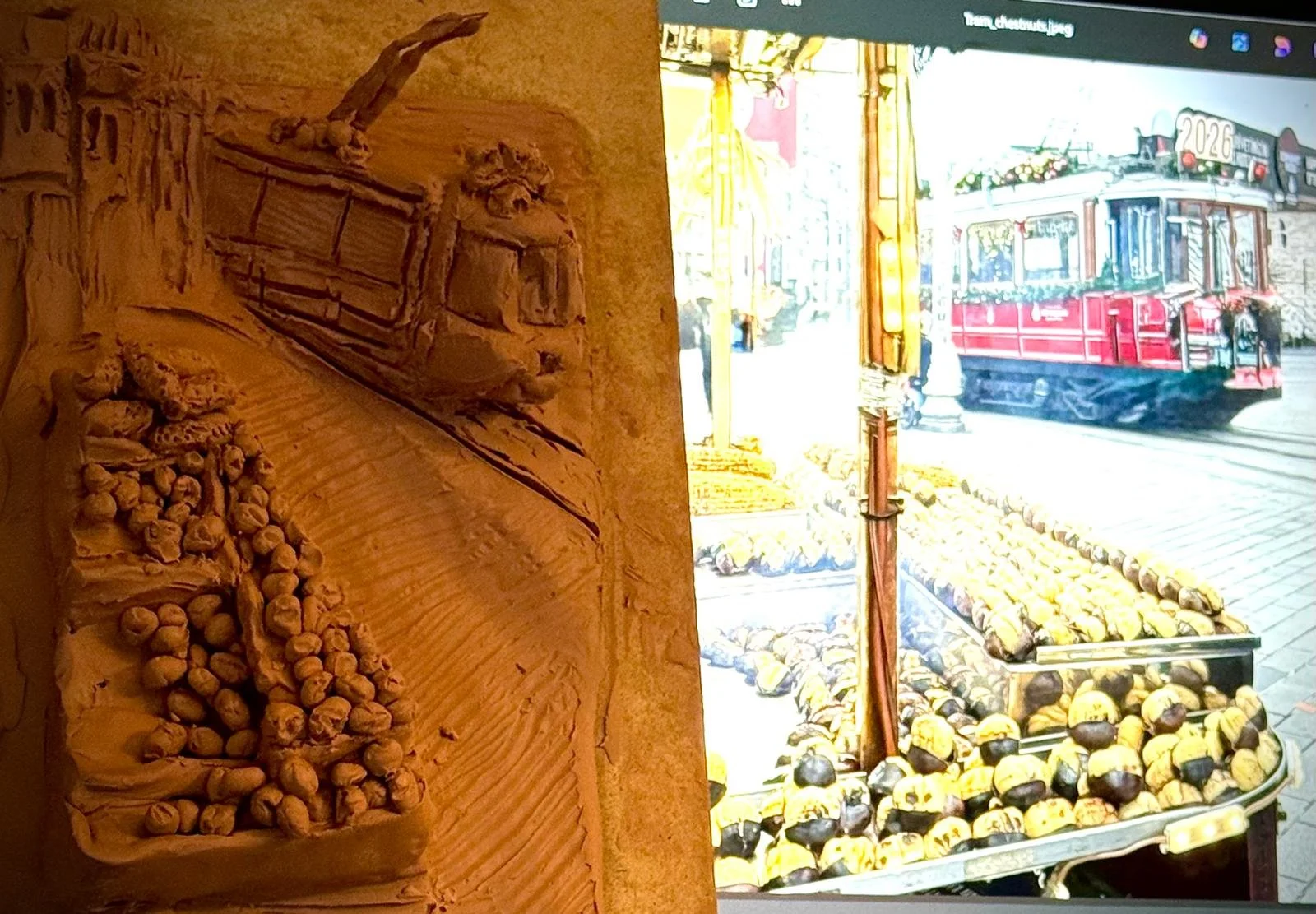
The smell of roasting chestnuts and the festive Istiklal Street tram is a wonderful way to welcome 2026.
I laid out this quick-sculpt at the site and put another hour into it back in the studio. Another cold day!
Chestnuts
The smell of kestane kebap (roasted chestnuts) is Istanbul’s unofficial signal that winter has arrived. This street food tradition is a centuries-old bridge between Anatolian agriculture and Ottoman urban life.
Historical Roots
The "Bread Tree": Because Turkey—specifically the nearby Bursa region—is a top global producer, chestnuts were historically known as the "bread of the mountains." They provided an affordable, high-energy staple for the city's working class during the Ottoman era.
The Street "Kebab": The name kestane kebap comes from the traditional method of scoring the shell and roasting the nut over a charcoal mangal (brazier), treating the chestnut with the same reverence as grilled meat.
The Modern Experience
The Red Carts: Today’s vendors use iconic red-and-gold carts. In a seasonal cycle, many of these vendors switch from selling grilled corn in the summer to chestnuts as soon as the temperature drops.
The Ritual: The nuts are cross-cut to allow steam to escape, roasted until the shells burst open, and served in small paper bags. For many, these bags serve a dual purpose as snacks and temporary hand-warmers.
T2 Taksim-Tünel Nostalgia Tramway
The iconic red tram on Istiklal Street, officially known as the T2 Taksim-Tünel Nostalgia Tramway, is one of Istanbul's most enduring symbols. Its history reflects the broader transformation of the city from an Ottoman capital to a modern metropolis.
Early Beginnings (1869–1914)
The history of trams in Istanbul began with horse-drawn carriages in 1869. The first tracks on what was then known as Grande Rue de Pera (today’s Istiklal Street) were laid in the late 19th century. These early trams were essential for connecting the cosmopolitan Galata and Pera districts to the rest of the city.
The Electric Era (1914–1961)
In 1914, the system was electrified. These were the classic red and white cars we see today. For decades, they were the primary mode of transport for Istanbulites. However, as the city grew and automobile traffic increased, the trams began to be seen as an obstacle to "modern" progress. The last electric tram on the European side was taken out of service on January 12, 1961, replaced by trolleybuses and motor buses.
The "Nostalgic" Revival (1990–Present)
After nearly 30 years of absence, the tram made a comeback.
1990: Istiklal Street was pedestrianized, and the city decided to restore the old tram line as a "nostalgic" heritage route.
Restoration: Many of the cars currently in use are original 1914 models that were painstakingly restored after being found in museums or storage.
Modern Update (2024): In May 2024, the city began introducing battery-powered versions of the red trams. While they look identical to the 100-year-old originals (retaining the wooden floors and reversible seats), they allow the city to eventually remove the overhead power lines that often get tangled with flags and decorations during holidays.
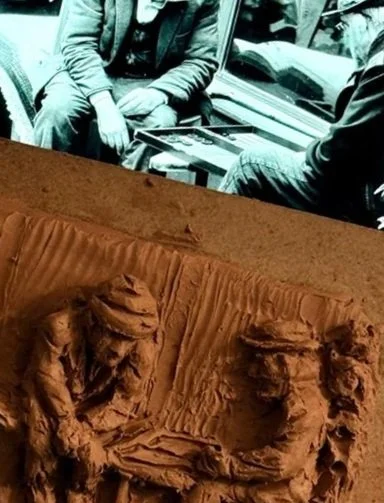
Backgammon - Istanbul
Origin
In the rural landscapes of Tunisia, I encountered a phrase that would eventually shape my worldview: "Numero Hadesh"—Number Eleven. Initially, it was a riddle. When I asked locals how to travel between locations, the answer was invariably "Number Eleven." For months, I scanned for bus routes or marked vehicles, finding none.
The breakthrough came when I finally paid attention to the body language accompanying the advice: index and middle fingers pointing down, swinging back and forth. Two legs. Two distinct "ones" moving side-by-side. "Numero Hadesh" wasn't a vehicle; it was the act of walking.
That realization took on profound meaning when I met my wife in Tunisia. We married to walk the path of life together, and the number 11 became our symbol. From our marriage date to the serendipity of catching the clock at 11:11, the image of parallel elevens represents two individuals moving forward, side-by-side, in distinct but shared unity.
Project 11 is born from this philosophy. It is a conscious decision to walk through life with open eyes, taking the time to recognize the wonders that connect us. As an artist, I see sculpture in everything, but the true vision of this project is to bring others along for the walk—to expand our understanding, explore new vantage points, and share the beauty that surrounds us all.
Introducing Project Eleven: A Journey of Art, Place, and Connection.
Project Eleven is an immersive artistic adventure that fuses intentional exploration with the power of sculpture. By deeply immersing ourselves in the rich culture of a city or the raw beauty of a natural landscape, we capture the essence of "place" through the simple, grounding act of walking.
But this is more than just a studio practice—it is a shared experience. Over the course of several weeks or months, we engage the community through live plein-air sculpting sessions, behind-the-scenes documentation, and on-site technical studies. The journey can culminate in a transformative gallery exhibition designed to be a contemplative sanctuary—a space that sparks wonder and prompts us to reflect on our own impact within the community and the environment that surrounds us.
Core Subject and Themes
The project will feature a collection of sculptures that draw inspiration from life and the inherent sculptural qualities of the observed world.
Primary Themes:
Impermanence and Change: Sculptures will utilize materials that evoke a sense of history, transformation, or motion (e.g., patinated metals, fired raw clays, balanced kinetic elements) to reflect the constant flux of nature and life.
Sculpting Our World: With a focus on process and experience, plein-air sculpting captures the spontaneity of life while recognizing the sculpture that surrounds us but is often unseen.
Interconnectedness: The arrangement and forms of the sculptures will suggest a dialogue between individual pieces, illustrating how discrete elements contribute to a cohesive, interdependent community life.
Artistic Vision and Style
The style is mainly figurative with some stylistic abstraction to emphasize specific themes. The artistic vision is to capture a sculptural sketch of life as it unfolds in real-time.
Audience:
The project is intended for a broad audience, including:
Individuals interested in the creative process, specifically related to the interaction and recognition of sculpture in everyday life.
Art enthusiasts and collectors interested in contemporary sculpture and cultural documentation.
Students and educators in art, history, and sculptural process.
Project Structure and Lay
The project will be structured into three components: historic narrative, photos/sketches of the theme, and sculptural ‘maquettes’ with scaled pieces, guiding the visitor through a sensory and conceptual journey:
I. Context (Historic Narrative)
Focus: Provide context for the current observed reality.
Key Messages: Recognition of historic context to explore the change or permanence of the observed theme.
II. Process (Capturing a Sculptural Snapshot)
Focus: Document methods and experience in identifying and capturing a theme in clay.
Key Messages: A focus on experience, movement, and the capture of a moment in life.
III. Sculptural Products (Physical Pieces)
Focus: Three-dimensional representations of life.
Key Messages: Artist and audience interpretation of an event to spark thoughtfulness on observing the wonders of our surroundings and the sculpture in our world.
Essential Information / Key Messages
Sculpture surrounds and influences us in ways that are often not recognized.
The process of sculpting is as fulfilling as the final results.
Final products of the sculpting process elicit emotions and motivations that can only be interpreted by the viewer.
Conclusion
"Project Eleven" offers a timely and compelling artistic inquiry into our relationship with our environment. By presenting life through tactile sculpture, contextual narrative, and documented process, the project aims to inspire awe, foster introspection, and reinforce the vital connection prompting visitors to reflect on their own place and impact within the community.
It All Begins Here- Visit this blog and sign up for our newsletter for the latest updates!
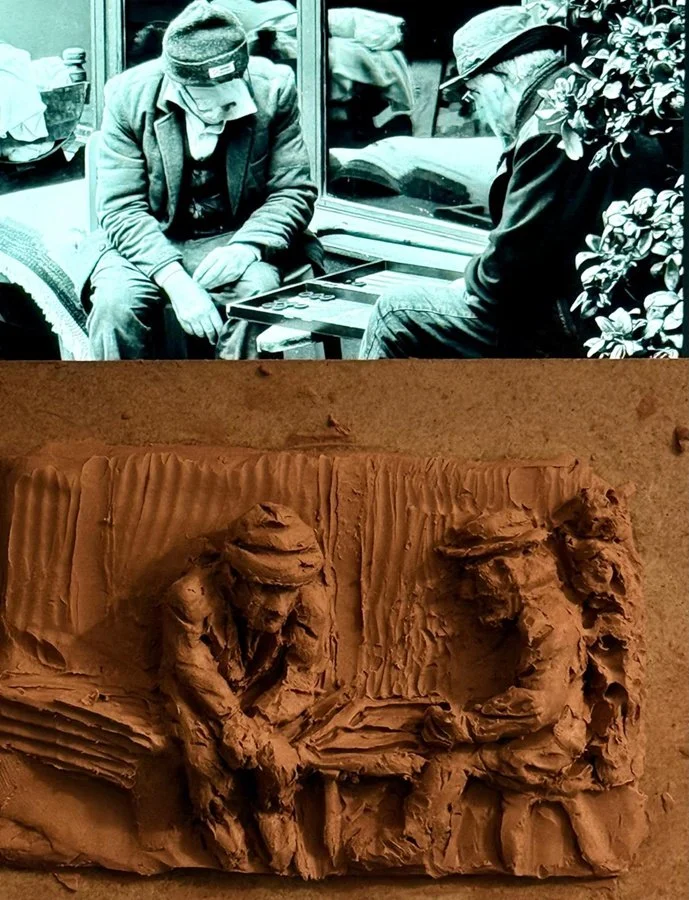
These gentlemen took a break from selling their antiques on a blustery afternoon for a few games of the preferred board-game in Istanbul - Backgammon.
I laid out this quick-sculpt in the neighborhood and put another hour into it at the apartment. Cold day!
History
In Istanbul, backgammon (known locally as Tavla) is more than just a game; it is a fundamental pillar of social life and a living connection to the city's Byzantine and Ottoman past.
Before it was the Turkish tavla, the game existed in Constantinople as Tabula. This Roman/Byzantine ancestor was played by emperors like Zeno (r. 474–491 AD), whose games were famously recorded in epigrams.
Archaeological finds in sites like Ephesus show that "tables" games were already ingrained in the culture of Anatolia long before the arrival of the Ottomans. When the Turks captured Istanbul in 1453, they didn't just inherit a city; they inherited a deeply rooted gaming culture that blended with Persian traditions of Nard.
Culture
The "golden age" of backgammon in Istanbul began in the 1550s with the opening of the first coffeehouses in the district of Tahtakale.
A Public Living Room: Coffeehouses (kahvehane) quickly became the heart of Istanbul's social life. While men gathered to drink coffee and discuss politics, the rhythmic clacking of dice on wooden boards became the city's background noise.
Symbolism: In Ottoman culture, the board was often seen as a microcosm of life:
24 points represent the hours of the day.
30 checkers represent the days of the month.
The dice represent the element of fate (Kismet).
Craftsmanship: Istanbul became a hub for master woodworkers who created exquisite boards using walnut, rosewood, and mother-of-pearl (sedef) inlays—a tradition that still thrives in the Grand Bazaar today.
Modern Culture: "Tavla" vs. Western Backgammon
Today, the game is ubiquitous in Istanbul, from the posh cafes of Nişantaşı to the gritty tea houses of Fatih or street games sculpted here. However, "Turkish Tavla" differs slightly from the international version:
Speed and Sound: Players in Istanbul play at a blistering pace, often rolling and moving with one hand while holding a glass of tea (ince belli) in the other.
The Doubling Cube: You will rarely see the doubling cube (used in Western competitive play) in a traditional Istanbul cafe; the Turkish game relies on a series of matches where the loser traditionally pays for the tea.
Dice Etiquette: It is common for players to "speak" to the dice or call out the numbers in a mix of Persian and Turkish (e.g., Dü-Şeş for 6-2 or Hep-Yek for 1-1).
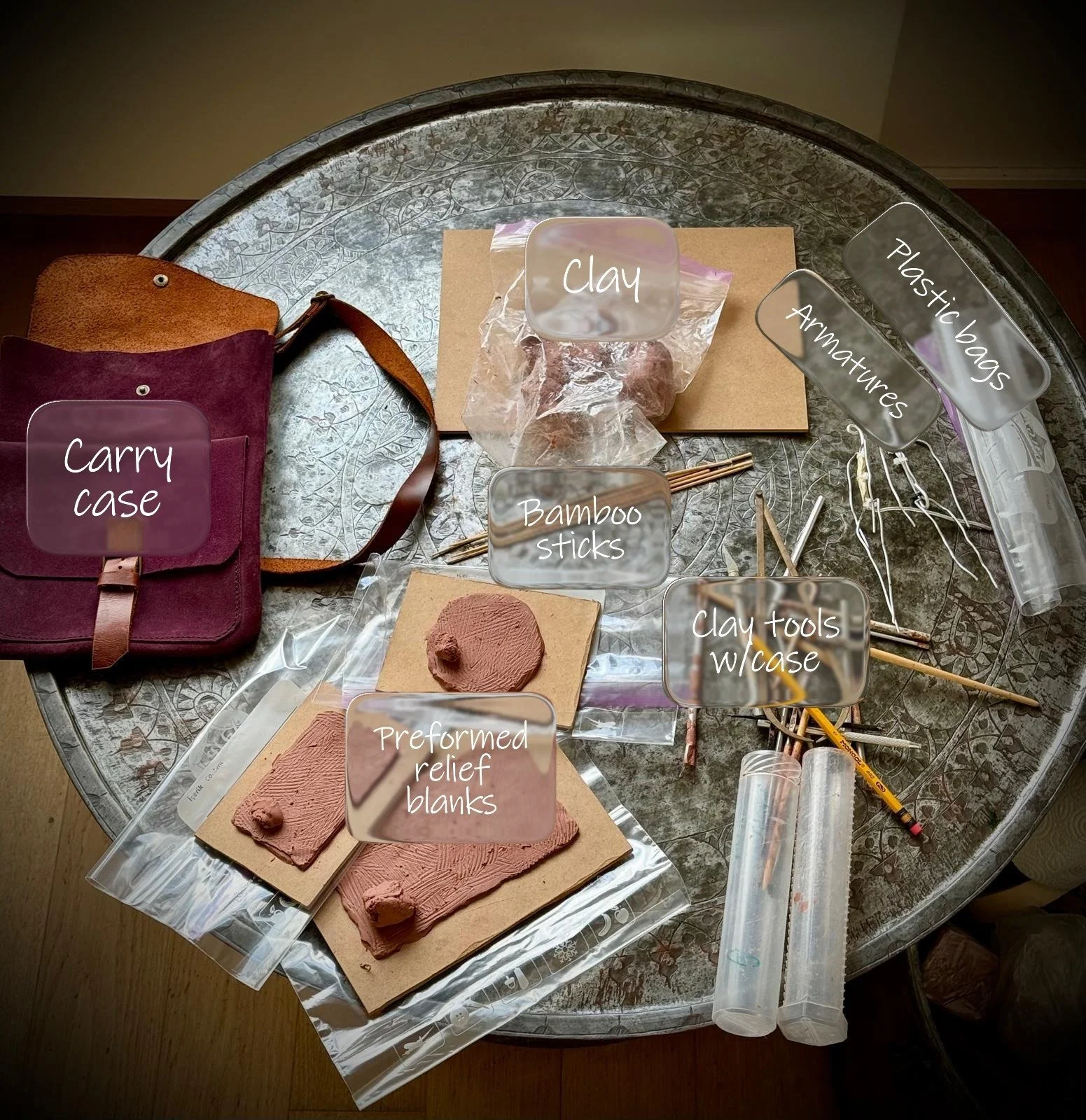
Project Eleven
Origin
In the rural landscapes of Tunisia, I encountered a phrase that would eventually shape my worldview: "Numero Hadesh"—Number Eleven. Initially, it was a riddle. When I asked locals how to travel between locations, the answer was invariably "Number Eleven." For months, I scanned for bus routes or marked vehicles, finding none.
The breakthrough came when I finally paid attention to the body language accompanying the advice: index and middle fingers pointing down, swinging back and forth. Two legs. Two distinct "ones" moving side-by-side. "Numero Hadesh" wasn't a vehicle; it was the act of walking.
That realization took on profound meaning when I met my wife in Tunisia. We married to walk the path of life together, and the number 11 became our symbol. From our marriage date to the serendipity of catching the clock at 11:11, the image of parallel elevens represents two individuals moving forward, side-by-side, in distinct but shared unity.
Project 11 is born from this philosophy. It is a conscious decision to walk through life with open eyes, taking the time to recognize the wonders that connect us. As an artist, I see sculpture in everything, but the true vision of this project is to bring others along for the walk—to expand our understanding, explore new vantage points, and share the beauty that surrounds us all.
Introducing Project Eleven: A Journey of Art, Place, and Connection.
Project Eleven is an immersive artistic adventure that fuses intentional exploration with the power of sculpture. By deeply immersing ourselves in the rich culture of a city or the raw beauty of a natural landscape, we capture the essence of "place" through the simple, grounding act of walking.
But this is more than just a studio practice—it is a shared experience. Over the course of several weeks or months, we engage the community through live plein-air sculpting sessions, behind-the-scenes documentation, and on-site technical studies. The journey can culminate in a transformative gallery exhibition designed to be a contemplative sanctuary—a space that sparks wonder and prompts us to reflect on our own impact within the community and the environment that surrounds us.
Core Subject and Themes
The project will feature a collection of sculptures that draw inspiration from life and the inherent sculptural qualities of the observed world.
Primary Themes:
Impermanence and Change: Sculptures will utilize materials that evoke a sense of history, transformation, or motion (e.g., patinated metals, fired raw clays, balanced kinetic elements) to reflect the constant flux of nature and life.
Sculpting Our World: With a focus on process and experience, plein-air sculpting captures the spontaneity of life while recognizing the sculpture that surrounds us but is often unseen.
Interconnectedness: The arrangement and forms of the sculptures will suggest a dialogue between individual pieces, illustrating how discrete elements contribute to a cohesive, interdependent community life.
Artistic Vision and Style
The style is mainly figurative with some stylistic abstraction to emphasize specific themes. The artistic vision is to capture a sculptural sketch of life as it unfolds in real-time.
Audience:
The project is intended for a broad audience, including:
Individuals interested in the creative process, specifically related to the interaction and recognition of sculpture in everyday life.
Art enthusiasts and collectors interested in contemporary sculpture and cultural documentation.
Students and educators in art, history, and sculptural process.
Project Structure and Lay
The project will be structured into three components: historic narrative, photos/sketches of the theme, and sculptural ‘maquettes’ with scaled pieces, guiding the visitor through a sensory and conceptual journey:
I. Context (Historic Narrative)
Focus: Provide context for the current observed reality.
Key Messages: Recognition of historic context to explore the change or permanence of the observed theme.
II. Process (Capturing a Sculptural Snapshot)
Focus: Document methods and experience in identifying and capturing a theme in clay.
Key Messages: A focus on experience, movement, and the capture of a moment in life.
III. Sculptural Products (Physical Pieces)
Focus: Three-dimensional representations of life.
Key Messages: Artist and audience interpretation of an event to spark thoughtfulness on observing the wonders of our surroundings and the sculpture in our world.
Essential Information / Key Messages
Sculpture surrounds and influences us in ways that are often not recognized.
The process of sculpting is as fulfilling as the final results.
Final products of the sculpting process elicit emotions and motivations that can only be interpreted by the viewer.
Conclusion
"Project Eleven" offers a timely and compelling artistic inquiry into our relationship with our environment. By presenting life through tactile sculpture, contextual narrative, and documented process, the project aims to inspire awe, foster introspection, and reinforce the vital connection prompting visitors to reflect on their own place and impact within the community.
It All Begins Here- Visit this blog and sign up for our newsletter for the latest updates!
Origin
In the rural landscapes of Tunisia, I encountered a phrase that would eventually shape my worldview: "Numero Hadesh"—Number Eleven. Initially, it was a riddle. When I asked locals how to travel between locations, the answer was invariably "Number Eleven." For months, I scanned for bus routes or marked vehicles, finding none.
The breakthrough came when I finally paid attention to the body language accompanying the advice: index and middle fingers pointing down, swinging back and forth. Two legs. Two distinct "ones" moving side-by-side. "Numero Hadesh" wasn't a vehicle; it was the act of walking.
That realization took on profound meaning when I met my wife in Tunisia. We married to walk the path of life together, and the number 11 became our symbol. From our marriage date to the serendipity of catching the clock at 11:11, the image of parallel elevens represents two individuals moving forward, side-by-side, in distinct but shared unity.
Project 11 is born from this philosophy. It is a conscious decision to walk through life with open eyes, taking the time to recognize the wonders that connect us. As an artist, I see sculpture in everything, but the true vision of this project is to bring others along for the walk—to expand our understanding, explore new vantage points, and share the beauty that surrounds us all.
Introducing Project Eleven: A Journey of Art, Place, and Connection
Project Eleven is an immersive artistic adventure that fuses intentional exploration with the power of sculpture. By deeply immersing ourselves in the rich culture of a city or the raw beauty of a natural landscape, we capture the essence of "place" through the simple, grounding act of walking.
But this is more than just a studio practice—it is a shared experience. Over the course of several weeks or months, we engage the community through live plein-air sculpting sessions, behind-the-scenes documentation, and on-site technical studies. The journey can culminate in a transformative gallery exhibition designed to be a contemplative sanctuary—a space that sparks wonder and prompts us to reflect on our own impact within the community and the environment that surrounds us.
Core Subject and Themes
The project will feature a collection of sculptures that draw inspiration from life and the inherent sculptural qualities of the observed world.
Primary Themes:
Impermanence and Change: Sculptures will utilize materials that evoke a sense of history, transformation, or motion (e.g., patinated metals, fired raw clays, balanced kinetic elements) to reflect the constant flux of nature and life.
Sculpting Our World: With a focus on process and experience, plein-air sculpting captures the spontaneity of life while recognizing the sculpture that surrounds us but is often unseen.
Interconnectedness: The arrangement and forms of the sculptures will suggest a dialogue between individual pieces, illustrating how discrete elements contribute to a cohesive, interdependent community life.
Target Audience
The project is intended for a broad audience, including:
Individuals interested in the creative process, specifically related to the interaction and recognition of sculpture in everyday life.
Art enthusiasts and collectors interested in contemporary sculpture and cultural documentation.
Students and educators in art, history, and sculptural process.
Project Structure
The project will be structured into three components: historic narrative, photos/sketches of the theme, and sculptural ‘maquettes’ with scaled pieces, guiding the visitor through a sensory and conceptual journey:
I. Context (Historic Narrative)
Focus: Provide context for the current observed reality.
Key Messages: Recognition of historic context to explore the change or permanence of the observed theme.
II. Process (Capturing a Sculptural Snapshot)
Focus: Document methods and experience in identifying and capturing a theme in clay.
Key Messages: A focus on experience, movement, and the capture of a moment in life.
III. Sculptural Products (Physical Pieces)
Focus: Three-dimensional representations of life.
Key Messages: Artist and audience interpretation of an event to spark thoughtfulness on observing the wonders of our surroundings and the sculpture in our world.
Essential Information / Key Messages
Sculpture surrounds and influences us in ways that are often not recognized.
The process of sculpting is as fulfilling as the final results.
Final products of the sculpting process elicit emotions and motivations that can only be interpreted by the viewer.
Conclusion
"Project Eleven" offers a timely and compelling artistic inquiry into our relationship with our environment. By presenting life through tactile sculpture, contextual narrative, and documented process, the project aims to inspire awe, foster introspection, and reinforce the vital connection prompting visitors to reflect on their own place and impact within the community.