

Where the Two Seas Meet: Three thousand years of history staying afloat
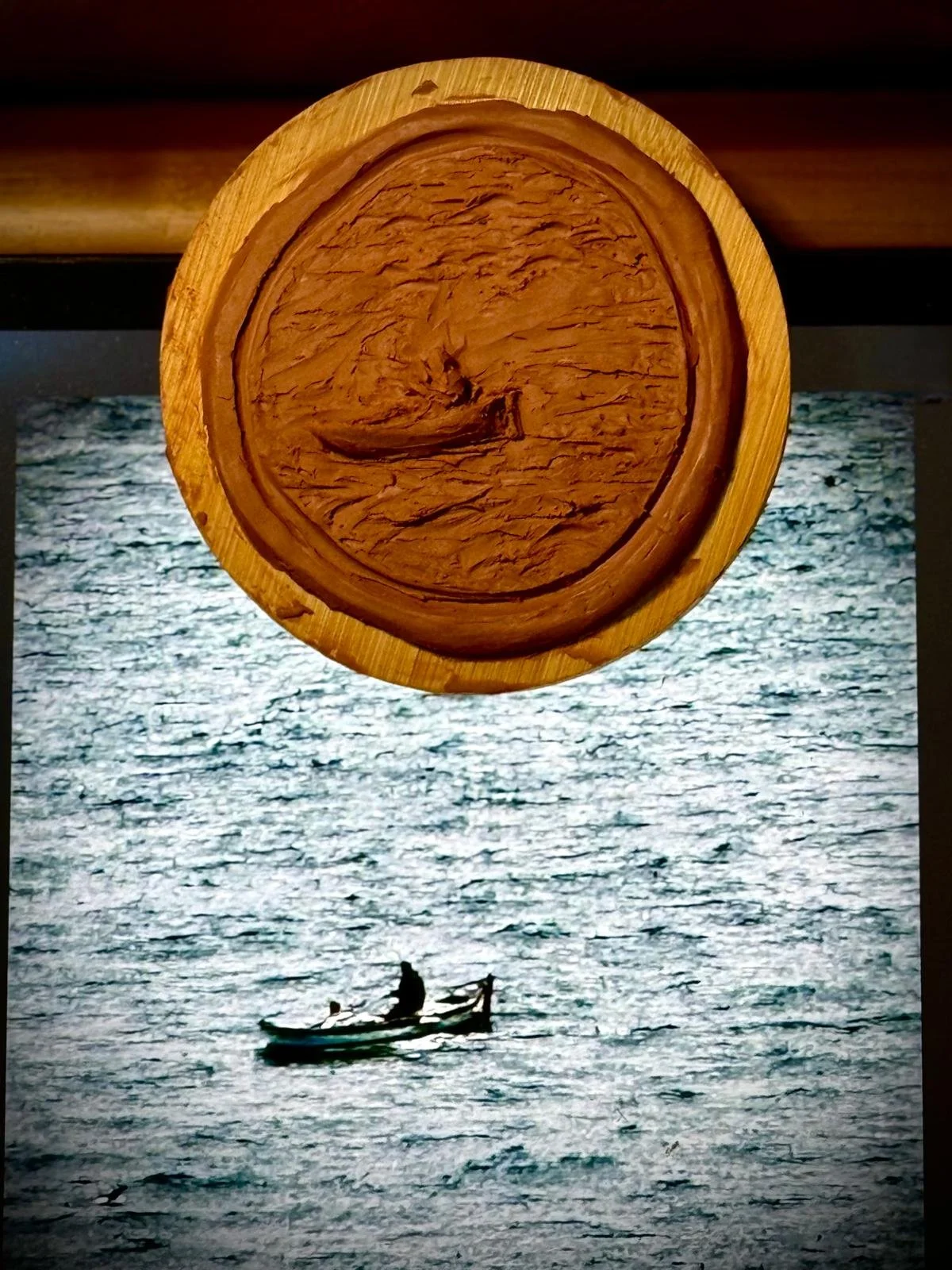
Solitary, colorful, and impossibly small, these wooden sandals bobbing in the treacherous Bosporus are symbols of pure staying power. Watching a lone fisherman hold his ground—or rather, his water—against the strait's churning currents and maritime traffic is an awe-inspiring sight. It is a living masterclass in tradition, proving that while empires and skylines shift, this quiet, rhythmic heritage remains anchored in the soul of Istanbul.
I laid out this quick-sculpt at Galata port and put another 1/2 hour into it back in the studio.
Standing at the edge of the Marmara Sea, where it narrows into the legendary Bosporus, you’ll see the massive container ships and high-speed ferries that define Istanbul’s modern pulse. But look closer, tucked against the sea walls of Ahırkapı or the quiet nooks of Üsküdar, and you’ll find the true soul of the strait: the sandals.
These small-scale wooden boats are more than just vessels; they are floating artifacts of a maritime culture that has survived empires.
A Living Heritage of the Strait
For centuries, the southern end of the Bosporus has served as a biological crossroads. The complex current system—where the cold, fresh water of the Black Sea flows south on the surface while warm, salty Mediterranean water creeps north underneath—creates a unique "fish highway."
Traditional fishermen here have mastered the art of reading these currents, a skill passed down through generations of İstanbullu families. This isn't industrial extraction; it's a rhythmic, seasonal dialogue with the sea.
The Seasonal Pulse: Whether it’s the autumn run of lüfer (bluefish) or the winter appearance of hamsi (anchovies), the small-boat fisherman’s life is governed by the lunar cycle and the North Wind (Poyraz).
The Craft: Many of these boats are still built or maintained using traditional techniques, featuring the classic curved hulls designed to cut through the treacherous "Devil’s Current" (Şeytan Akıntısı).
The "Balık-Ekmek" Legacy
While the tourist boats at Eminönü are famous, the cultural heart of small-scale fishing lies in the communal spirit of the barınak (fishing shelters). Here, the catch isn't just a commodity; it’s a social bond.
Historical accounts from the Ottoman era describe the Bosporus as being so thick with fish that you could practically scoop them up with baskets. While the abundance has changed, the rituals remain: the mending of nets by hand, the shared glasses of tea at dawn, and the deep-seated respect for the sea's temperamental nature.
"The Bosporus doesn't belong to the land; it is a world unto itself, with its own laws and its own language spoken only by those who row upon it."
Why It Matters Today
In an era of rapid urban development, these small-scale fishermen are the guardians of Istanbul’s ecological memory. They are the first to notice changes in water quality or shifting migration patterns. Supporting this micro-industry isn't just about food—it's about preserving the "blue" identity of a city that is increasingly made of concrete.
Next time you're walking the southern shores, skip the crowded piers. Look for the lone fisherman in his brightly painted sandal, patiently waiting for the bluefish to strike. You're not just looking at a hobby; you're looking at three thousand years of history staying afloat.