

Chestnuts and New Year Tram
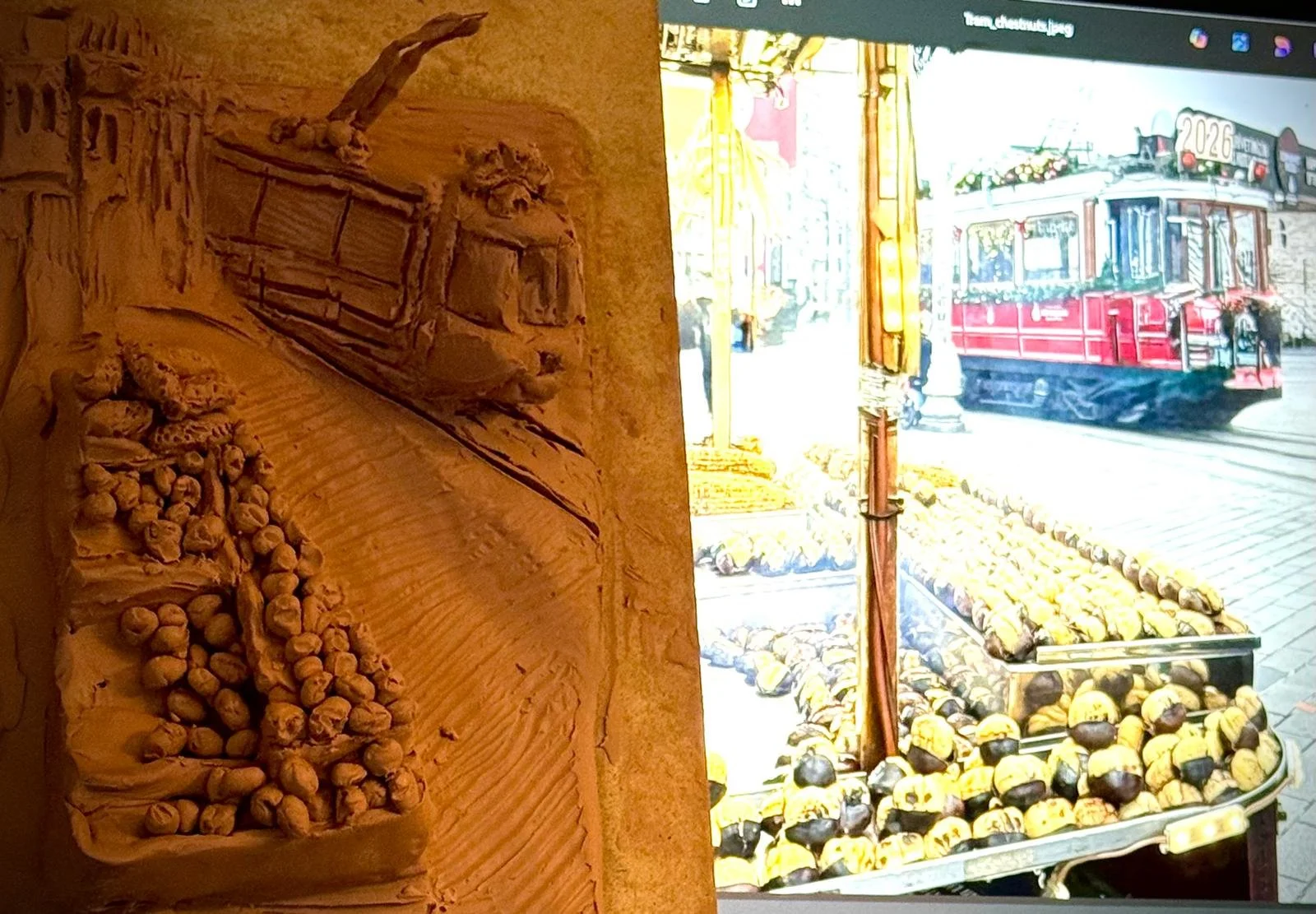
The smell of roasting chestnuts and the festive Istiklal Street tram is a wonderful way to welcome 2026.
I laid out this quick-sculpt at the site and put another hour into it back in the studio. Another cold day!
Chestnuts
The smell of kestane kebap (roasted chestnuts) is Istanbul’s unofficial signal that winter has arrived. This street food tradition is a centuries-old bridge between Anatolian agriculture and Ottoman urban life.
Historical Roots
The "Bread Tree": Because Turkey—specifically the nearby Bursa region—is a top global producer, chestnuts were historically known as the "bread of the mountains." They provided an affordable, high-energy staple for the city's working class during the Ottoman era.
The Street "Kebab": The name kestane kebap comes from the traditional method of scoring the shell and roasting the nut over a charcoal mangal (brazier), treating the chestnut with the same reverence as grilled meat.
The Modern Experience
The Red Carts: Today’s vendors use iconic red-and-gold carts. In a seasonal cycle, many of these vendors switch from selling grilled corn in the summer to chestnuts as soon as the temperature drops.
The Ritual: The nuts are cross-cut to allow steam to escape, roasted until the shells burst open, and served in small paper bags. For many, these bags serve a dual purpose as snacks and temporary hand-warmers.
T2 Taksim-Tünel Nostalgia Tramway
The iconic red tram on Istiklal Street, officially known as the T2 Taksim-Tünel Nostalgia Tramway, is one of Istanbul's most enduring symbols. Its history reflects the broader transformation of the city from an Ottoman capital to a modern metropolis.
Early Beginnings (1869–1914)
The history of trams in Istanbul began with horse-drawn carriages in 1869. The first tracks on what was then known as Grande Rue de Pera (today’s Istiklal Street) were laid in the late 19th century. These early trams were essential for connecting the cosmopolitan Galata and Pera districts to the rest of the city.
The Electric Era (1914–1961)
In 1914, the system was electrified. These were the classic red and white cars we see today. For decades, they were the primary mode of transport for Istanbulites. However, as the city grew and automobile traffic increased, the trams began to be seen as an obstacle to "modern" progress. The last electric tram on the European side was taken out of service on January 12, 1961, replaced by trolleybuses and motor buses.
The "Nostalgic" Revival (1990–Present)
After nearly 30 years of absence, the tram made a comeback.
1990: Istiklal Street was pedestrianized, and the city decided to restore the old tram line as a "nostalgic" heritage route.
Restoration: Many of the cars currently in use are original 1914 models that were painstakingly restored after being found in museums or storage.
Modern Update (2024): In May 2024, the city began introducing battery-powered versions of the red trams. While they look identical to the 100-year-old originals (retaining the wooden floors and reversible seats), they allow the city to eventually remove the overhead power lines that often get tangled with flags and decorations during holidays.